TL;DR
TL;DR: A Product Engineering Pod is a small, crossfunctional, AInative engineering unit typically 4 to 6 senior people covering product, build, evaluation, and

TL;DR: A Product Engineering Pod is a small, cross-functional, AI-native engineering unit (typically 4 to 6 senior people covering product, build, evaluation, and platform) that owns a defined product outcome end-to-end across a multi-quarter engagement. Unlike staff augmentation, a pod is contracted as one delivery unit with a single monthly band; unlike project outsourcing, the pod stays past launch to operate, evolve, and hand off the system on the client's terms. At MarsDevs, pods run $8K to $35K per month with a 3-month minimum. Composition, cost, and decision tree below.

A Product Engineering Pod is a 4-to-6-person senior engineering unit, AI-native by default, contracted as one delivery unit on a monthly band rather than a head-count timesheet. It exists for one buying scenario. You need outcome ownership over a defined product area for two or more quarters, and you can't (or don't want to) recruit four senior engineers in ninety days.
The pod is the unit. Not the contractor. The pod ships the outcome and stays past launch to operate and evolve it. That single sentence is the whole differentiator.
Who this page is for: CTOs and VP-Engs at Series A through Series D scale-ups, founders of post-PMF companies inheriting brittle codebases, and operating partners at PE firms evaluating engineering augmentation for portfolio companies. If you are a pre-seed founder shipping your first MVP, this is the wrong unit for you. Read our MVP-stage build guide instead. Pods are heavier and slower to spin up than the work justifies at that stage.
The shape of the pod matters more than the badge. Across thirty-plus engagements, the four-role lineup (Product Strategist, Agentic Engineer, Evaluation Engineer, fractional Platform/DevOps) is what ships AI-native product work in 2026. Older "dedicated team" framing from the 2018 outsourcing playbook (four full-stack contractors plus a PM) is what most agencies still sell. The difference is whether the team can ship evaluation harnesses, LangGraph control loops, and production guardrails without a separate engagement.
A pod is contracted as one delivery unit with outcome ownership on a monthly band. Staff augmentation is per-head hourly billing where your engineering manager absorbs the management tax. Project outsourcing is a fixed-scope bid with a deliverable and no post-launch operation. The three models look similar from a distance and behave nothing like each other in practice.
The table below is the version we walk CTO buyers through on a discovery call. It is the cleanest way to size the right engagement before you commit budget.
| Dimension | Product Engineering Pod | Staff Augmentation | Project Outsourcing |
|---|---|---|---|
| Contracting unit | One delivery unit (the pod) | Per-engineer per-hour | Fixed scope, fixed bid |
| Accountability sits with | The pod (outcome) | Your EM (hours) | The vendor (deliverable) |
| Engagement length | Multi-quarter (6 to 18 months typical) | Weeks to a few months | Scope-bounded (typically 2 to 6 months) |
| Management overhead on your side | Low (pod has its own delivery lead) | High (10 to 40% of your EM's time per 4 contractors) | Medium (RFP, milestones, change orders) |
| Knowledge retention after launch | High (pod stays to operate) | Low (contractors rotate out) | Medium-low (handoff at delivery) |
| Pricing structure | Monthly band | Hourly per head | Fixed bid plus change orders |
| Best for | Defined outcome, 2+ quarters, evolving requirements | Specific skill gap, stable EM, <4 months | Genuinely fixed scope (rare) |
| Worst for | Pre-PMF founders, single specialist needs | Replacing an EM, owning a product area | Anything with discovery still ahead |
Across thirty-plus engagements, the break-even between staff aug and pod is roughly three engineers sustained for four months. Below that threshold, staff aug is cheaper on paper. Above it, the management tax (one EM at roughly $200K fully burdened spending 25 to 40% of their week on four contractors) eats the savings, and the per-head rotation pattern of staff aug strips your codebase of context every six months.
The pod model trades up-front contracting simplicity for back-loaded operational value. It is the right trade for any product area you expect to still own in eighteen months.
An AI-native Product Engineering Pod in 2026 has four seats: a Product Strategist, an Agentic Engineer (senior full-stack with applied-AI fluency), an Evaluation Engineer, and a fractional Platform/DevOps Engineer shared across pods. For non-AI builds, the Evaluation Engineer seat becomes a senior QA Engineer with automation expertise. That's the default lineup. Everything else is variation on this skeleton.
This shape did not exist in 2022. The Evaluation Engineer seat is the new one (the role traditional QA people grow into when the product surface is non-deterministic), and the Product Strategist seat now requires AI literacy in a way it didn't two years ago. Older pod shapes survive in the market but ship slower on AI-native work.
The Product Strategist owns the roadmap, runs discovery, and manages the client-side relationship. Week 1, they are scoping the outcome and writing the decision log. Week 8, they are pairing with the Agentic Engineer on the evaluation harness and re-forecasting the next quarter's scope. The seat is roughly 30 to 50% PM, 30 to 40% business analyst, and 20 to 30% delivery management.
Without this seat, the pod becomes four engineers waiting for the client to tell them what to build. With it, the pod runs its own discovery and brings back framed options. That is the difference between a delivery pod and a contractor pool.
The Agentic Engineer is the primary builder. AI-fluent by default: ships LangGraph, LlamaIndex, RAG, and agent control loops natively, and is at home in Next.js / FastAPI / Postgres for the surrounding system. Typical experience floor: five years, weighted toward applied AI work in the last eighteen months. This is the seat we route the most senior people into.
For technical depth on what this seat actually owns, read our agentic RAG architecture guide. It covers the production patterns we ship in this seat across pods.
The Evaluation Engineer owns the eval harness, the regression suite, and the production guardrails. They write Ragas pipelines, instrument Phoenix or Langfuse traces, and build the offline-online evaluation loop that catches regressions before they hit users. This is a distinct discipline from traditional QA: the artifacts are pipelines, not test cases, and the work is continuous, not gate-based.
For non-AI pods, the seat is a senior QA engineer with automation expertise (Playwright, k6, contract testing). The role title changes. The engineering posture (treat quality as a build artifact, not a phase) doesn't.
Platform engineers are usually shared at 0.5 FTE across two pods. They own infrastructure, CI/CD, observability, and security baseline. The fractional pattern works because platform work is bursty: heavy at engagement start (provisioning, deploy pipelines, secrets, environments), then steady-state with episodic spikes (new region, new compliance audit, scaling events). The pod gets continuous coverage without paying for idle capacity. This seat usually runs on our default 2026 startup stack: AWS, GitHub Actions, Datadog or Grafana, Terraform.
| Pod type | Composition | When to buy |
|---|---|---|
| 3-person discovery pod | PM + 1 Engineer + fractional Architect | Paid 2-4 week scoping; pre-engagement framing |
| 4-person AI-native build pod | PM + Agentic Engineer + Evaluation Engineer + fractional Platform | Series A new product line; AI feature in existing product |
| 5-person scaling pod | PM + 2 Engineers + Evaluation/QA + fractional Platform | Series A-B scaling a shipped product |
| 7-person replatforming pod | PM + fractional Architect + 2 Engineers + UI/UX + Eval/QA + Platform | Series B-D replatform; multi-stream parallel build |
[VIGNETTE 1 — Series A AI build]
A Series A B2B SaaS approached us mid-2025 to automate the most labor-intensive workflow in their customer success function. They had product-market fit, a small in-house team focused on the core platform, and no capacity to spin up an AI surface in parallel. We deployed a 4-person AI-native pod (Product Strategist, two Agentic Engineers, fractional Platform) for a 20-week engagement.
What we shipped. A LangGraph agent that handled the inbound workflow end-to-end (intent classification, retrieval against the customer's internal knowledge base, structured action selection with human-in-the-loop fallback), an evaluation harness running on every PR, and a cost-attribution dashboard tied to per-customer usage.
What worked. Pulling the Evaluation Engineer into week-1 scope discussions, not week-6. The evaluation rubric got drafted before the agent had any working code, which kept scope conversations grounded in measurable outcomes instead of vibes.
What went sideways. Four friction moments we will name plainly, because no real engagement runs clean. Week 4: the customer's internal knowledge base had inconsistent doc structure and retrieval precision dropped from roughly 87% to 61% on a subset of queries. We rebuilt the chunking strategy mid-flight, 2-week cost. Week 9: the eval harness flagged a regression that turned out to be a vendor model-version rollover, not our code. Three days lost diagnosing before we caught it. Week 11: the CS team rejected the first human-in-the-loop UI because the action queue interrupted their existing workflow. We redesigned it with three CS-lead pairing sessions, 2 weeks. Month 1 post-launch: per-customer cost on long-tail tenants ran roughly 3x projection because retrieval ran uncapped. We shipped per-tenant token budgets the same week. Total slip absorbed inside the original 20-week window. The pod ate it.
The numbers. Automated 38% of inbound tier-1 CS volume in the first month post-launch. CSAT held at 4.6/5 on automated paths versus the 4.7/5 human-handled baseline.
Pod composition is not one-size-fits-all. A Series A pod is senior-heavy and lean (four seats). A Series B pod adds a second engineer and elevates the platform seat to closer to full-time (five seats). A Series B-D replatforming pod adds a fractional Staff Architect plus a dedicated UI/UX Engineer (seven seats). The reason isn't budget. It's the work itself.
At Series A you're shipping discoveries against an untested hypothesis. Lean and senior beats balanced and big. At Series B-D you're integrating into an existing org, an existing codebase, and an existing customer contract surface. Lean stops working because the integration tax dwarfs the build tax. You need the Staff Architect to make defensible system-level calls, and the UI/UX seat to keep the surface coherent across two parallel product streams.
| Stage | Pod composition | Why this shape |
|---|---|---|
| Series A ($0-5M ARR) | 4 seats: PM + Agentic Engineer + Eval + fractional Platform | Discovery-heavy; senior-heavy beats balanced; ship-rate over coverage |
| Series B ($5-20M ARR) | 5 seats: PM + 2 Engineers + Eval/QA + fractional Platform | Shipped product to scale; need parallel-stream capacity and stronger ops |
| Series B-D ($20M+ ARR) | 7 seats: PM + fractional Architect + 2 Engineers + UI/UX + Eval/QA + Platform | Replatforming and AI-integration into existing systems; integration tax dominates |
[VIGNETTE 2 — Series B-D replatforming]
A B2B fintech platform in the treasury and payments segment at roughly $10-12M ARR came to us with an eight-year-old Rails monolith that had become the bottleneck on every customer commitment. The in-house team was capable but pinned to feature delivery and could not run a parallel migration. We deployed a 7-person replatforming pod (Product Strategist, fractional Staff Architect, two Full-Stack Engineers, UI/UX Engineer, Evaluation/QA Engineer, Platform Engineer) on a 9-month engagement.
What we shipped. A Strangler Fig migration extracting 4 bounded contexts into Next.js + FastAPI services behind a thin gateway, a staged data migration with dual-write for the critical contexts, and a production observability rollout that gave the in-house team operational visibility for the first time.
What worked. Locking the migration order to a dependency graph the in-house team co-signed in week 2. Every extraction had explicit upstream and downstream sign-off before code moved.
What went sideways. We assumed the original team's Confluence was current. It wasn't. The first bounded context took 40% longer than budgeted because the documented contract didn't match the actual runtime behavior in three places. The pod absorbed the slip by re-sequencing the next extraction (a smaller, better-documented context) before resuming the original critical path. Subsequent extractions ran with code-as-truth, not docs-as-truth.
The numbers. Deploy time across the extracted services dropped from 28 minutes to 5 minutes. P95 latency on the highest-traffic extracted service dropped from 1.2 seconds to 280ms. Both metrics held through the next two quarters.
Pods are priced as a single monthly band, not per-head. The band reflects pod composition, AI intensity, and engagement length. Four pod compositions, four bands. The numbers below are our published bands as of this quarter.
| Pod composition | Roles | Typical monthly band | Minimum engagement |
|---|---|---|---|
| 3-4 person AI starter pod | 1 sr engineer + 1 mid + 1 PM/QA + 1 DevOps | $8K-$15K/mo | 2-4 week paid discovery ($3K-$10K) + 3-month minimum |
| 4-5 person product pod | 2 sr + 1 mid + 1 PM/QA + 1 DevOps | $13K-$20K/mo | 3 months at $10K total minimum |
| 5-6 person platform pod | 2 sr + 2 mid + 1 PM/QA + 1 DevOps + 1 UI/UX | $15K-$25K/mo | 3 months; 6-12 months standard |
| 7-8 person full pod | 3 sr + 2 mid + 1 PM + 1 DevOps + 1 UI/UX | $20K-$35K/mo | 6-12 months |
Two pricing points are non-negotiable on our side. First: the engagement minimum is three months at $10K total, with paid discovery available at $3K to $10K for two to four weeks of scoping. Anything shorter is better served by staff augmentation or a targeted project engagement, and we'll route you there rather than start a pod that won't have time to onboard. Second: the band is a band. We commit to it for the engagement length and absorb composition shifts inside the band rather than raising change orders for every adjustment.
For comparable benchmarks across engagement models and geographies, see our breakdown of global developer rates in 2026 and the real cost of our last 5 SaaS builds.
A note on the body-shop frame. You will see vendors advertise "dedicated developers from $15/hour." That number is real (it is roughly our floor for solo senior contractor work), but it is the wrong frame for a pod. A pod is bought as outcomes, not hours. The monthly band exists so you can plan budget without watching timesheets.
Pick a pod when you need outcome ownership over a defined product area for two or more quarters AND you cannot (or do not want to) recruit four senior engineers in ninety days. Pick a hire when the work is permanent and you want IP and culture continuity in-house. Pick staff augmentation when you have a stable EM with bandwidth and need a specific skill gap closed for under four months. Pick project outsourcing when scope is genuinely fixed (rare in practice).
Walk the tree top-down. Most CTO buyers land on pod or hire. Staff aug is the right answer less often than the market suggests.

The break-even math. Across thirty-plus engagements, the staff-aug-to-pod crossover sits at roughly three engineers sustained for four months. Below that, staff aug is cheaper on paper. Above it, the management overhead (one EM at roughly $200K fully burdened spending 25 to 40% of their time on four contractors) consumes the savings. Independent analyses of staff augmentation hidden costs put the overhead multiplier in the 30 to 45% range, which lines up with what we see on the ground.
Pods are wrong for three common scenarios. Knowing which one you're in saves a quarter of misalignment.
Anti-pattern 1: Pre-PMF founders shipping their first MVP. Pods are heavy. A four-person pod with a three-month minimum is over-built for an MVP you're still validating. Buy a lighter MVP-stage engagement (we run those too) and convert to a pod after PMF. What to buy instead: a focused MVP build.
Anti-pattern 2: Single specialist for a short window. If you need one ML engineer for a six-week project to ship a specific model, that's staff aug, not a pod. Don't pay for product-management overhead and platform support you won't use. What to buy instead: staff augmentation for the named role.
Anti-pattern 3: Genuinely fixed-scope deliverable with no operational follow-on. A one-time data migration with a clear before-and-after, no production operation downstream, no evolving requirements: that's project work. Get a fixed bid, get a milestone schedule, ship it, walk away. What to buy instead: fixed-scope project engagement.
If you are in any of these three, the pod model burns budget without returning the value that justifies its overhead. We'll tell you that on the discovery call rather than sell you a pod that won't fit.
A well-onboarded pod is producing reviewable work by day 14 and shipping merged PRs by day 30. The 30-day arc is a fixed pattern: discovery and access provisioning in week 1, environment parity and first PR in week 2, first feature in production in week 3, and a retrospective with scope adjustment in week 4. Deviate from the pattern and the pod loses three to six weeks of velocity, which the back end of the engagement never fully recovers.
Here is the playbook we run on every pod kickoff.
[VIGNETTE 3 — AI integration into existing product]
A vertical SaaS in field service and dispatch at roughly $4-7M ARR came to us wanting to add a RAG-backed assistant alongside an existing Django + React product. The existing API surface had to stay backward-compatible. The new surface had to feel native. The founder-CTO had been told the in-house path would take six months of hiring before a single line of code shipped. We deployed a 5-person pod (Product Strategist, two Agentic Engineers, Evaluation Engineer, fractional Platform) for a 22-week engagement.
What we shipped. A retrieval pipeline over the customer's existing document corpus, a chat surface integrated into the existing React app behind a feature flag, an evaluation harness scoring retrieval quality on a curated benchmark plus production traces, and a kill-switch operationally owned by the in-house team from day one.
What worked. Refusing to commit a feature roadmap until paid discovery finished. Discovery surfaced two false constraints in the original spec (one about latency requirements, one about data freshness) that would have over-built the system by an estimated 4-6 weeks of unnecessary infrastructure work. Restraint at week 1 paid for the rest of the engagement.
What went sideways. The primary user persona shifted mid-engagement. Week-6 customer interviews surfaced that the dispatcher persona we had scoped against was not the highest-leverage user. The driver persona was. We re-scoped the chat surface, the retrieval index, and the eval rubric for the driver workflow inside a 2-week window. The eval harness caught the regression on the original dispatcher benchmark before the pivot shipped, which is the entire point of the seat.
The numbers. Shipped 4 of 5 in-flight workstreams inside the 22-week engagement. The founder-CTO's in-house alternative had been six months of hiring before code shipped; the pod path saved an estimated $140K versus three senior engineers. Week 23: the founder-CTO took over operationally with zero unblocking calls back to the pod.
Most agency case studies are useless. The ones worth reading have four things: a named industry and ARR stage, exact pod composition with seniority, engagement length, and at least one quantified outcome or a timeline-to-launch in weeks. If a case study has none of these, it is brand-fluff. Walk away.
Treat the case study as a forensics exercise, not a sales document. The four signals below cover what actually matters.
| What to look for | Why it matters | Red flag if missing |
|---|---|---|
| Named industry + ARR stage (anonymized OK) | Tells you the work is at your scale, not a different sport | Generic "leading B2B platform" with no stage signal: they're hiding it |
| Exact pod composition (roles + seniority) | Tells you the team that shipped is the team you'll get | "A dedicated team of experts": body-shop framing, no commitment |
| Engagement length in weeks or months | Tells you whether they ship or just bill | No timeline at all: the engagement either failed or stalled |
| At least one quantified outcome (or timeline-to-launch) | Tells you the work landed somewhere measurable | All testimonial, no numbers: the customer wouldn't sign off on a metric |
Two extra signals separate good from great. A "what went sideways" paragraph (no real engagement runs clean). And a handoff or operational ownership note (because if the team disappeared at launch, the case study is a project, not a partnership).
If you're sizing a pod for the next quarter, the most useful next step is a two-week paid discovery. We use it to scope the outcome, surface false constraints, and produce a written engagement plan you can take to a board meeting whether or not you continue with us.
MarsDevs runs product engineering pods for Series A through Series D scale-ups, with a 3-month minimum engagement and a published monthly band per pod composition. Founded in 2019 and headquartered in Pune, we run replatforming, multi-year SaaS, and AI integration engagements with a 100-plus engineer bench across 80-plus shipped products in 12 countries. We are not the right partner for first-MVP founders (we route those engagements differently) or for genuinely fixed-scope project work. For everything between those two cases, the pod is the unit we recommend and the unit we run.
Scope a partnership: book a two-week paid discovery via our contact page, or read the pricing piece below for the full math.
A product engineering pod is a small, cross-functional, AI-native engineering unit (typically 4 to 6 senior people covering product, build, evaluation, and platform) that owns a defined product outcome across a multi-quarter engagement, contracted as one delivery unit on a monthly band rather than per-head.
Staff augmentation embeds individual contractors into your team, billed hourly per head, managed by your engineering manager. A pod is contracted as one delivery unit with outcome ownership, a monthly band, and its own delivery lead. No per-head management tax on your EM.
Usually 4 to 7. A Series A pod is 4 seats (PM, Agentic Engineer, Evaluation Engineer, fractional Platform). A Series B pod adds a second engineer (5 seats). A Series B-D replatforming pod adds a fractional Staff Architect and UI/UX Engineer (7 seats).
Pods are priced as a single monthly band, not per-head. At MarsDevs, bands run from roughly $8K to $35K per month depending on composition, AI intensity, and engagement length. The minimum engagement is 3 months at $10K total, with paid discovery available at $3K to $10K.
Hire when the work is permanent and you want IP and culture continuity. Use a pod when you need outcome ownership over a defined product area for 2+ quarters AND you cannot recruit 4+ senior engineers in 90 days. The break-even with staff augmentation sits at roughly 3 engineers sustained for 4+ months.
Yes. That is the defining promise of a pod model versus project outsourcing. The pod owns the system through launch and operation, then runs a structured handoff: documentation depth, runbooks, decision logs, and code walkthroughs. We have handed off multiple codebases to incoming in-house CTOs.
An AI-native pod adds an Evaluation Engineer seat (Ragas, Phoenix, Langfuse pipelines) and elevates the lead engineer to "Agentic Engineer," fluent in LangGraph, LlamaIndex, RAG architecture, and agent control loops. It treats evaluation as a first-class engineering discipline, not a QA afterthought.
MarsDevs' minimum is 3 months at $10K total, with paid discovery available at $3K to $10K for 2-4 weeks. Anything shorter is better served by staff augmentation or a targeted project engagement. Pods need roughly 30 days to onboard before they're producing at full velocity.
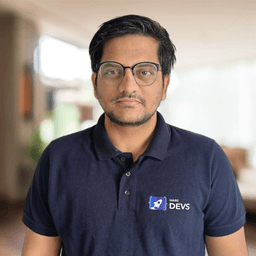
Co-Founder, MarsDevs
Vishvajit started MarsDevs in 2019 to help founders turn ideas into production-grade software. With deep expertise in AI, cloud architecture, and product engineering, he has led the delivery of 80+ software products for clients in 12+ countries.
Get more insights like this
Join founders, CTOs, and engineering leaders who receive our engineering insights weekly. No spam, just actionable technical content.


