TL;DR
In-house team vs outsourcing: real cost comparison, hiring timelines, quality tradeoffs, and when each model wins. Data from 80+ projects across both models.

Founders fixate on hourly rates. That is the wrong number.
A senior software developer in the US commands $150K-$250K in base salary. Add benefits (health insurance, 401k matching, PTO), payroll taxes, equipment, office space, software licenses, and management overhead. The total cost of ownership (TCO) lands between $210K and $380K per year for a single engineer, according to Full Scale's 2026 salary analysis. Total cost of ownership is the complete cost of a development team including salary, benefits, recruitment, turnover, tools, infrastructure, and management overhead.
Salary is just the beginning.
Recruitment alone adds $30K-$50K per hire. Recruiter fees, job board listings, interview hours, and the productivity gap during ramp-up all stack up. The average US software developer stays at a company for 2.1 years. Replacing a mid-senior engineer costs 50-200% of their annual salary in recruiting, lost productivity, and knowledge transfer.
At 2.1-year average tenure, you are paying a 25-50% annual turnover tax on every developer.
Then there is the opportunity cost. Hiring takes 3-6 months for senior roles. That is 3-6 months your product is not shipping features, not responding to user feedback, not beating competitors to market. If you are a startup burning $50K-$100K per month in runway, those months cost more than any engineer's salary. We have seen founders spend their entire seed round on hiring before writing a single line of production code.
Outsourcing is not just "multiply hourly rate by hours." The costs people miss: requirements documentation ($15K-$40K for complex projects), project management overhead (15-25% of total budget), and knowledge transfer when the contract ends (20-30% of original project cost), according to Netcorp's cost analysis.
Scope changes on fixed-price contracts are expensive. Poor specifications lead to 30-40% higher defect rates and costly rework cycles. And if you need to switch vendors mid-project, expect to lose 2-3 months of momentum.
| Cost Factor | In-House (US-Based) | Outsourcing (Offshore/Nearshore) | Notes |
|---|---|---|---|
| Senior developer (annual) | $210K-$380K total | $55K-$115K equivalent output | Outsourcing saves 40-60% |
| 3-person team, 6 months | $315K-$570K | $80K-$200K | In-house includes full overhead |
| Recruitment per hire | $30K-$50K | $0 (vendor handles) | Outsourcing eliminates hiring friction |
| Time to start | 3-6 months (hiring) | 1-4 weeks (team ramp-up) | Outsourcing wins on speed |
| Management layer | $180K-$250K per eng manager | Included in vendor pricing | Hidden in-house cost |
| Turnover replacement | 50-200% of annual salary | Vendor replaces at no extra cost | Major in-house risk |
| Knowledge transfer at exit | N/A (knowledge stays) | 20-30% of project cost | Hidden outsourcing cost |
The real question is not "which is cheaper?" It is: what does each dollar buy you in speed, control, and long-term value?
Every founder weighing the build vs outsource decision needs to look beyond cost. Here is the full picture.
| Factor | In-House | Outsourcing | Winner |
|---|---|---|---|
| Total cost (year 1) | Higher (salary + overhead + recruiting) | 40-60% lower | Outsourcing |
| Total cost (year 3+) | Stabilizes as team matures | Accumulates vendor margins | In-house (if low turnover) |
| IP protection | Full control. Code in your repos. | Depends on contract terms. | In-house |
| Team ramp-up time | 3-6 months to hire and onboard | 1-4 weeks with the right partner | Outsourcing |
| Institutional knowledge | Builds over time. Stays in-house. | Walks out the door when the contract ends. | In-house |
| Cultural alignment | Organic. Shared values and goals. | Requires active effort. | In-house |
| Scalability | Slow. Each hire takes months. | Fast. Scale up or down in weeks. | Outsourcing |
| Communication overhead | Low. Same office, same time zone. | Higher. Time zones, language, tools. | In-house |
| Access to specialized skills | Limited to who you can recruit locally. | Global talent pool. AI, blockchain, niche stacks. | Outsourcing |
| Project continuity | High (barring turnover). | Risk of vendor changes or contract gaps. | In-house |
| Flexibility | Rigid. FTEs are a fixed cost. | Elastic. Pay for what you need. | Outsourcing |
| Quality control | Direct. You review every PR. | Indirect. Depends on vendor processes. | In-house |
Neither model wins across the board. The right answer depends on your stage, your budget, your technical leadership, and how fast you need to move.
Building in-house is the right move in specific situations. Not every situation.
Your product IS the technology. If the engineering itself is your competitive moat (a database company, a dev tools startup, proprietary AI models), that knowledge needs to live inside your walls. Outsourcing your core differentiator is outsourcing your advantage.
You have 18+ months of runway and can absorb hiring timelines. Hiring takes time. If you can wait 3-6 months for the right senior engineers and another 1-3 months for ramp-up, the long-term payoff in institutional knowledge and cultural alignment is worth the wait.
You already have technical leadership. A CTO, VP of Engineering, or strong tech lead who can evaluate candidates, set architecture, and mentor the team. Without this person, an in-house team drifts. Bad hires compound. Technical debt piles up faster than features ship.
You need deep domain expertise that compounds over time. Healthcare compliance, financial regulations, complex multi-tenant architectures. These domains require engineers who build context over years, not months. Rotating outsourced teams lose that context every contract cycle.
Your regulatory environment demands it. Some industries (defense, certain healthcare applications, government contracts) have strict requirements about where code is written, who has access, and where data resides. In-house teams simplify compliance.
If you are a non-technical founder, evaluating whether you truly need in-house engineers is one of the hardest calls you will make. The instinct is to hire. But hiring the wrong team burns more runway than outsourcing ever could. We have watched founders spend 6 months and $200K+ on hiring, only to end up with a team that cannot ship.
Outsourcing wins when speed, flexibility, or access to scarce skills matters more than long-term team building.
You need to ship before your runway runs out. The global IT outsourcing market is projected to reach $198.3B in 2026, and the primary driver is no longer cost. It is speed. Outsourcing compresses a 6-month hiring cycle into a 2-4 week team ramp-up. For a seed-stage startup with 12 months of runway, that difference is existential.
You lack internal technical leadership. Not every founder is technical. That is fine. A good outsourcing partner brings not just engineers but a technical lead, project manager, and QA. MarsDevs provides senior engineering teams for founders who need to ship fast without compromising quality. You get the entire execution layer without hiring a single full-time employee.
You need specialized skills for a defined period. Building an AI feature? Migrating to cloud-native? Integrating real-time payment processing? These require specialists you may not need long-term. Outsourcing gives you access to senior AI engineers, DevOps architects, or mobile specialists for exactly as long as you need them.
Your requirements are well-defined with a clear finish line. A mobile app for a specific use case. A data migration. An internal tool. If you can write a detailed spec and the project has a defined deliverable, outsourcing delivers predictable outcomes at a fixed cost.
You are validating a market before committing to full-time hires. Ship the MVP with an outsourced team. A Minimum Viable Product (MVP) is the simplest version of a product that delivers core value to early users. Get real user feedback. Prove traction to your investors. Then decide whether to hire internally or keep outsourcing for iteration.
We have shipped 80+ products across 12 countries using exactly this playbook. Founders come to us with an idea, we ship V1 in 6-8 weeks, and they make their next move based on real market data instead of guesswork.
The binary "insource vs outsource software" debate is outdated. The hybrid development model combines in-house product vision with outsourced execution. In 2026, 75% of high-growth companies run a hybrid model. They keep core product vision internal and use external partners for execution and specialized work.
Here is what that looks like in practice:
You have an idea and seed funding. No CTO, no engineers. Outsource V1 to a product engineering partner who delivers a working product with full code ownership from day one. You get to market in weeks, not months.
Once you have product-market fit and revenue (or Series A funding), hire 2-3 key people: a technical lead or CTO, a product manager, and one senior engineer. These people own product direction, architecture decisions, and institutional knowledge.
Your internal team sets priorities and reviews code. Augmented engineers handle execution. Staff augmentation is an engagement model where external senior engineers embed directly into your existing team, working under your management. You scale up for launches, scale down between sprints. No bench costs. No 6-month hiring cycles.
This is how many of our clients engage. They start with full-delivery outsourcing, transition to staff augmentation once they hire a CTO, and keep their core team lean while external engineers handle capacity. The key: 100% code ownership transfers on day one. Zero vendor lock-in when you switch models.
It fails when you skip Phase 2. Without internal technical leadership, no one evaluates the outsourced team's work, sets architectural direction, or onboards new engineers. The outsourcing partner becomes a black box, and you lose the ability to course-correct.
The talent shortage makes hybrid even more practical. Universities produce roughly 65,000 CS graduates annually against demand for 180,000 AI-capable engineers. The developer shortage in 2026 is 40% more severe than 2025. You cannot afford to wait 6 months to hire when augmented engineers can start this week.
| Hybrid Phase | In-House Role | Outsourced Role | Typical Duration |
|---|---|---|---|
| Foundation | Product vision, stakeholder management | Full product build, architecture, QA | 2-4 months |
| Core hiring | CTO/tech lead, 1-2 senior engineers | Continued feature development | 3-6 months |
| Scale | Architecture, code review, product direction | Feature execution, specialized work | Ongoing |
IP protection is the number one concern founders raise about outsourcing. Intellectual property (IP) ownership determines who holds legal rights over code, designs, and inventions created during a software development engagement. Valid concern. Straightforward solution.
At MarsDevs, every client gets 100% code ownership from day one. Code lives in your repos. We work with your NDAs. No IP ambiguity, no escrow arrangements, no surprises. We have done this across 80+ engagements since 2019, and we built our entire process around making IP transfer frictionless.
Yes, outsourcing is typically 40-60% cheaper for the first 12-18 months. A senior US-based developer costs $210K-$380K annually in total compensation and overhead, while equivalent outsourced talent costs $55K-$115K. The gap narrows over 2-3 years as your in-house team matures and turnover stabilizes. Factor in hidden outsourcing costs (knowledge transfer at 20-30% of project cost, project management overhead at 15-25% of budget) before making a purely cost-based decision.
Sign NDAs before any technical discussions begin, include explicit work-for-hire clauses in your contract, and require all code to live in your repositories from day one. Use role-based access controls so engineers only access what they need. At MarsDevs, every client gets 100% code ownership from day one with no escrow or transfer clauses required. Choose partners who make IP ownership unambiguous in their standard engagement model.
Outsourcing or a hybrid model works better for most AI projects. AI development requires scarce, specialized skills (ML engineers, LLM specialists, data engineers) that are extremely expensive and difficult to recruit full-time. Universities produce 65,000 CS graduates annually against demand for 180,000 AI-capable engineers. Outsourcing gives you immediate access to senior AI specialists without a 6-month hiring cycle. Keep your AI product strategy in-house. Outsource the engineering execution.
A good outsourcing partner can assemble a team and start productive work in 1-4 weeks. At MarsDevs, we start building within 48 hours for staff augmentation engagements and within 1-2 weeks for full project delivery. Compare that to 3-6 months for in-house hiring (job posting, interviews, offers, notice periods, onboarding). The ramp-up timeline depends on project complexity, required documentation, and how well-defined your requirements are.
Yes. This is one of the most common paths for growing startups. The key is owning 100% of the code from day one, so there is no vendor lock-in. Vendor lock-in is a situation where switching development vendors becomes difficult because the current vendor holds code, domain context, or infrastructure dependencies. Start with outsourced development to ship V1 and prove product-market fit. Then gradually build an internal team while your outsourcing partner continues execution. The transition typically takes 3-6 months with a planned handover, knowledge documentation, and overlapping engagement periods.
The top risks: communication overhead across time zones, cultural misalignment (ranked in the top 5 reasons for offshore project failure), loss of institutional knowledge when contracts end, IP exposure without proper legal protections, and vendor lock-in if code ownership is not established upfront. Mitigate these by choosing a partner with clear communication protocols, overlapping work hours, transparent code ownership, and a proven delivery track record. Check references, read Clutch reviews, and start with a small pilot project before committing to a large engagement.
The hybrid development model combines in-house and outsourced teams. Companies keep product vision, architecture decisions, and institutional knowledge in-house while outsourcing execution and specialized engineering work. In 2026, 75% of high-growth companies run this model. The typical path: outsource V1 to ship fast, hire a core internal team once you have product-market fit, then augment with external engineers for scale.
A senior software developer in the US costs $210K-$380K per year in total cost of ownership. This includes $150K-$250K base salary plus benefits (health insurance, 401k, PTO), payroll taxes, equipment, office space, software licenses, and management overhead. Add $30K-$50K in recruitment costs per hire and factor in the 2.1-year average tenure, which creates a 25-50% annual turnover tax.
Choose in-house development when your product IS the technology (the engineering is your competitive moat), when you have 18+ months of runway to absorb hiring timelines, when you already have strong technical leadership (CTO or VP of Engineering), when you need deep domain expertise that compounds over time (healthcare compliance, financial regulations), or when your regulatory environment demands it (defense, government contracts).
The decision depends on four factors: runway (under 18 months favors outsourcing for speed), technical leadership (no CTO favors outsourcing with a trusted partner), project type (core IP favors in-house, execution favors outsourcing), and scalability needs (variable demand favors outsourcing's elasticity). Most startups in 2026 start with outsourcing to ship V1, then transition to a hybrid model as they grow. The worst decision is no decision, since every month spent debating hiring strategies instead of shipping is a month competitors are building.
The in-house vs outsourcing development decision is not permanent. It evolves with your company. Seed stage? Outsource to ship fast. Series A? Hire a core team and augment. Series B and beyond? Build deep in-house expertise and bring in external partners for specialized work.
The worst decision is no decision. Every month spent debating hiring strategies instead of shipping product is a month your competitors are building.
MarsDevs is a product engineering company that builds AI-powered applications, SaaS platforms, and MVPs for startup founders. Founded in 2019, MarsDevs has shipped 80+ products across 12 countries for startups and scale-ups. We take on 4 new projects per month. Whether you need a full outsourced team to ship V1 or senior engineers to augment your existing team, we can have engineers writing code in 48 hours.
Book a free strategy call and figure out which model fits your stage, your budget, and your timeline.
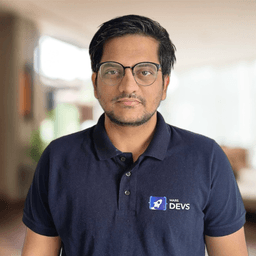
Co-Founder, MarsDevs
Vishvajit started MarsDevs in 2019 to help founders turn ideas into production-grade software. With deep expertise in AI, cloud architecture, and product engineering, he has led the delivery of 80+ software products for clients in 12+ countries.
Get more insights like this
Join founders, CTOs, and engineering leaders who receive our engineering insights weekly. No spam, just actionable technical content.


