TL;DR
There is no single best LLM provider. OpenAI offers the broadest ecosystem and strongest agentic tooling. Anthropic leads coding benchmarks with 1M-token context at standard pricing. Google delivers the best price-to-performance with context windows up to 2M tokens. Most production AI products in 2026 benefit from a multi-provider strategy. This comparison covers pricing, benchmarks, API features, enterprise readiness, and a decision framework from a team that builds with all three.

TL;DR: Pick by use case, not hype. OpenAI GPT-5.4 wins for agentic tooling and the broadest lineup (budget to flagship). Anthropic Claude Opus 4.6 wins for coding with 80.8% on SWE-bench Verified and 1M-token context. Google Gemini 3 Pro wins for multimodal and the 2M-token context at $2/$12 per million tokens. Most 2026 production stacks use all three via model routing, cutting inference costs 40-60% without sacrificing quality. MarsDevs has deployed multi-LLM systems across 12 countries since 2023.
Anthropic vs OpenAI vs Google: which is best in 2026? There is no single winner. As of 2026, Anthropic Claude Opus 4.6 is best for coding, leading SWE-bench Verified at 80.8% with a 1M-token context. OpenAI GPT-5.4 is best for agentic tooling and the broadest model lineup. Google Gemini 3 Pro is best for multimodal and long documents, with a 2M-token context at $2/$12 per million tokens. Most production teams route across two or three providers.
| Provider | Best for | Flagship model | Standout (2026) |
|---|---|---|---|
| Anthropic | Coding, complex analysis | Claude Opus 4.6 | 80.8% SWE-bench Verified, 1M-token context |
| OpenAI | Agentic tooling, broad lineup | GPT-5.4 | Widest model range, budget to flagship |
| Multimodal, long context | Gemini 3 Pro | 2M-token context at $2/$12 per million tokens |
OpenAI, Anthropic, and Google are the three dominant providers of large language models (LLMs) for production AI products. A large language model is an AI system trained on massive text datasets that can generate, analyze, and transform text based on natural language instructions. Each provider takes a different approach to pricing, safety, developer experience, and enterprise readiness. As of March 2026, their flagship models (GPT-5.4, Claude Opus 4.6, Gemini 3 Pro) score within 1-2 points of each other on most benchmarks, making the real differentiators pricing structure, context window size (the maximum tokens an LLM processes per request), API features, and compliance posture.
You are building an AI-powered product. Maybe it is a customer support bot, an internal knowledge search, a coding assistant, or a document analysis tool. You know you need a large language model. Three providers dominate the market: OpenAI, Anthropic, and Google.
Here is the thing: picking the wrong one does not just waste API credits. It locks you into architectural decisions, SDK dependencies, and pricing structures that cost months to unwind. We have seen founders burn $20K+ migrating between providers mid-project because they chose based on hype instead of their actual requirements.
The OpenAI vs Anthropic vs Google comparison in 2026 looks different from even a year ago. The top models from each lab now score within 1-2 points of each other on most benchmarks. The real differences are in pricing, developer experience, context windows, safety approaches, and enterprise readiness.
MarsDevs is a product engineering company that builds AI-powered applications for startup founders. We build with all three providers depending on the use case, and we have shipped production systems on each. This comparison comes from real project decisions, not documentation summaries.
Each provider now offers a full stack of models from budget to flagship. Knowing which model sits where saves you from overpaying or underperforming.
OpenAI is an AI research company that develops the GPT series of large language models. OpenAI runs the largest model portfolio, spanning from the ultra-cheap GPT-4.1 Nano to the flagship GPT-5.4. Their reasoning models (o3, o4-mini) occupy a unique niche for complex multi-step problems. Full pricing details are available on OpenAI's pricing page.
Anthropic is an AI safety company that develops the Claude series of large language models. Anthropic keeps a tighter lineup, focusing on three tiers. Their March 2026 release of Opus 4.6 and Sonnet 4.6 with full 1M context at standard pricing shifted the long-context economics significantly.
Google develops the Gemini series of large language models with aggressive pricing and the largest context windows available. Google's Gemini lineup is the most aggressive on pricing, especially at the lower tiers. Their free tier (1,000 daily requests) makes prototyping essentially free.

Pricing determines which LLM is viable for your product at scale. Google Gemini is the cheapest provider per token. OpenAI offers the widest range of price points. Anthropic is the most expensive but charges no long-context surcharge on their 4.6 models. A model that costs $0.50 per query in testing becomes $15,000/month at 1,000 queries per day.
| Model | Input/1M Tokens | Output/1M Tokens | Context Window | Best For |
|---|---|---|---|---|
| GPT-5.4 (OpenAI) | $2.50 | $15.00 | 1.1M | Agentic tasks, computer use |
| GPT-4.1 (OpenAI) | $2.00 | $8.00 | 1M | General production use |
| Claude Opus 4.6 (Anthropic) | $5.00 | $25.00 | 1M | Coding, complex analysis |
| Claude Sonnet 4.6 (Anthropic) | $3.00 | $15.00 | 1M | Balanced quality/cost |
| Gemini 3 Pro (Google) | $2.00 | $12.00 | 2M | Long-context, multimodal |
| Gemini 2.5 Pro (Google) | $1.25 | $10.00 | 2M | Cost-effective production |
| Model | Input/1M Tokens | Output/1M Tokens | Context Window | Best For |
|---|---|---|---|---|
| GPT-4.1 Nano (OpenAI) | $0.10 | $0.40 | 1M | Classification, routing |
| GPT-4.1 Mini (OpenAI) | $0.40 | $1.60 | 1M | Mid-tier production tasks |
| Claude Haiku 4.5 (Anthropic) | $1.00 | $5.00 | 200K | Fast responses, high volume |
| Gemini 2.5 Flash (Google) | $0.15 | $0.60 | 1M | High-volume, cost-sensitive |
| Gemini 2.5 Flash-Lite (Google) | $0.10 | $0.40 | 1M | Cheapest viable option |
All three providers offer ways to cut costs:
The short answer on pricing: Google wins on raw cost per token. OpenAI wins on variety (more price points to fit more budgets). Anthropic is the most expensive but charges no long-context surcharge on their 4.6 models.
For a deeper breakdown of what AI development actually costs end to end, see our AI development cost guide.
Benchmarks tell part of the story. Real-world performance tells the rest. Here is how the flagship models from each provider perform across use cases that actually matter for production products.
SWE-bench Verified is a benchmark that evaluates LLMs by testing their ability to resolve real GitHub issues, measuring practical software engineering capability.
| Benchmark | Claude Opus 4.6 | GPT-5.4 | Gemini 3.1 Pro | What It Tests |
|---|---|---|---|---|
| SWE-bench Verified | 80.8% | 74.9% | 80.6% | Real GitHub issue resolution |
| SWE-bench Pro | ~45% | 57.7% | 54.2% | Harder software tasks |
| Terminal-Bench 2.0 | 65.4% | 75.1% | N/A | Agentic terminal execution |
Claude Opus 4.6 and Gemini 3.1 Pro are nearly tied on SWE-bench Verified, the benchmark that best mirrors real-world bug fixing. GPT-5.4 pulls ahead on Terminal-Bench, which measures the model's ability to execute multi-step terminal commands autonomously.
| Benchmark | Claude Opus 4.6 | GPT-5.4 | Gemini 3.1 Pro | What It Tests |
|---|---|---|---|---|
| ARC-AGI-2 | 68.8% | N/A | 77.1% | Abstract reasoning |
| MMLU-Pro | ~90% | ~91% | ~92% | Broad knowledge |
Gemini 3.1 Pro leads on abstract reasoning by a significant margin, scoring 77.1% on ARC-AGI-2 compared to Claude's 68.8%. For general knowledge tasks, all three models cluster within 1-2 percentage points.
Here is what benchmarks do not tell you: production performance depends on your specific data, prompt engineering, and system architecture. We have seen Claude outperform GPT on one client's legal document analysis while GPT outperformed Claude on another client's customer support automation. Same models, different results.
The gap between the top models is just 1-2 points on most benchmarks. Your prompting strategy, RAG architecture, and system design matters more than which model you pick.
When you are building a product (not just chatting with an AI), the API experience determines your development velocity. Function calling is an LLM API feature that allows models to invoke external tools and APIs in a structured format during inference. All three providers support it, but maturity levels differ.
| Feature | OpenAI | Anthropic | |
|---|---|---|---|
| Function calling | Mature, widely adopted | Strong, XML-structured | Solid, Vertex AI integration |
| Structured output | Native JSON mode | Tool use patterns | JSON mode via Vertex |
| Streaming | Full support | Full support | Full support |
| Multi-modal input | Vision, audio, video | Vision, PDF native | Vision, audio, video (strongest) |
| Multi-modal output | Image generation (DALL-E) | Text only | Image generation (Imagen) |
| SDK quality | Python, Node, .NET, Java | Python, TypeScript | Python, Node, Go, Java |
| Documentation | Extensive, large community | Clean, well-organized | Scattered across Cloud docs |
| Rate limits (Tier 1) | 500 RPM | 50 RPM | 360 RPM |
| Fine-tuning | GPT-4o, GPT-4.1 | Limited availability | Full support via Vertex AI |
| Prompt caching | Automatic | Manual (cache_control) | Context caching |
OpenAI has the most mature ecosystem. The Agents SDK, function calling, and Assistants API give you production-ready building blocks. The community is the largest, which means more tutorials, examples, and Stack Overflow answers when you get stuck. If you are building AI agents, OpenAI's tooling is the most battle-tested.
Anthropic has the cleanest API design. The XML-structured tool use pattern produces more consistent outputs. Claude's 1M context window works reliably for large document processing without the quality degradation some models show past 200K tokens. If your product processes long documents (legal contracts, codebases, research papers), Claude's long-context performance is a genuine advantage.
Google offers the deepest cloud integration. If you are already on Google Cloud, Gemini through Vertex AI gives you identity management, VPC service controls, and billing integration out of the box. Google also leads on multi-modal capabilities: Gemini processes video natively, which neither OpenAI nor Anthropic match as effectively. The free tier makes Google the cheapest way to prototype.
If you are a non-technical founder evaluating these APIs, the differences can feel abstract until you hit production. Rate limits that seem fine during testing become blockers at scale. A model that handles your test prompts well might choke on edge cases in your actual data. This is exactly why working with engineers who have shipped on all three platforms matters.
If you are building for regulated industries or enterprise customers, compliance is not optional. Here is where each provider stands.
| Requirement | OpenAI | Anthropic | |
|---|---|---|---|
| SOC 2 Type II | Yes | Yes | Yes |
| ISO 27001 | Yes | Yes | Yes |
| HIPAA | Yes (Enterprise) | Yes (Enterprise) | Yes (via Google Cloud) |
| GDPR | Yes | Yes | Yes |
| FedRAMP | Yes | In progress | Yes (High authorization) |
| Data training opt-out | Enterprise tier | All API usage | Enterprise tier |
| SSO/SCIM | Yes | Yes | Yes (Cloud IAM) |
| Audit logging | Yes | Yes | Yes |
| Private deployment | Azure OpenAI | AWS Bedrock | Vertex AI |
| Data residency | Limited regions | AWS regions | 35+ Google Cloud regions |
Google has the strongest enterprise compliance posture, period. FedRAMP High authorization, 35+ data residency regions, and deep integration with Google Cloud's compliance infrastructure give it an edge for heavily regulated workloads.
Anthropic leads on AI safety controls. Their Constitutional AI approach and prompt injection mitigation are more mature than competitors'. Every API call is zero-retention by default (not just on enterprise tiers), meaning Anthropic never trains on your data regardless of your plan.
OpenAI offers the broadest deployment flexibility through Azure OpenAI Service. If your enterprise already runs on Azure, you get OpenAI models with Azure's compliance certifications, identity management, and private networking. That is a significant advantage for Microsoft-shop enterprises.
For generative AI products in healthcare, finance, or government, your cloud provider often dictates your LLM provider. An Azure shop will lean OpenAI. A Google Cloud shop will lean Gemini. An AWS shop will lean Anthropic (available through Bedrock).
Stop comparing benchmarks. Start matching providers to your actual product requirements. Here is the framework we use with clients at MarsDevs.
Here is what most production AI products should actually do: use multiple providers.
MarsDevs provides senior engineering teams for founders who need to ship AI products fast without compromising quality. We build with all three providers and help you pick (or combine) the right one for your specific product. A wrong architecture choice here costs you months of migration work while your competitors ship.
Want to make the right LLM decision before writing a line of code? Book a free strategy call with our engineering team.
Founders always ask about the bottom line. Here are ranges from real AI projects we have shipped.
| Project Type | Typical Cost | Timeline | Provider Consideration |
|---|---|---|---|
| AI MVP (chatbot, Q&A) | $5,000-$15,000 | 3-6 weeks | Single provider, start cheap |
| Production AI feature | $15,000-$30,000 | 6-10 weeks | Evaluate 2 providers in prototype |
| RAG system | $8,000-$50,000 | 4-12 weeks | Provider choice affects retrieval quality |
| Multi-model AI product | $25,000-$75,000 | 8-16 weeks | Multi-provider architecture from day one |
Monthly API costs at scale vary wildly. A chatbot handling 10,000 queries/day on Gemini 2.5 Flash costs ~$150/month. The same volume on Claude Opus 4.6 costs ~$7,500/month. Model selection is a business decision, not just a technical one.
If you are a founder staring at these numbers and wondering where to start, that is exactly the conversation we have on strategy calls. You do not need to figure this out alone.

Google Gemini is the cheapest option for production. Gemini 2.5 Flash costs $0.15/$0.60 per million input/output tokens, and Gemini 2.5 Flash-Lite drops to $0.10/$0.40 (matching OpenAI's GPT-4.1 Nano). Google also offers 1,000 free daily requests and a 50% batch API discount, making it the most cost-effective provider for high-volume applications. For near-flagship quality at budget pricing, Gemini 2.5 Pro ($1.25/$10.00) is the sweet spot.
Claude Opus 4.6 leads SWE-bench Verified (80.8%), the benchmark that best mirrors real-world bug fixing on GitHub issues. Gemini 3.1 Pro scores nearly identically at 80.6%. GPT-5.4 wins Terminal-Bench 2.0 (75.1%) for autonomous terminal execution. For most coding use cases, Claude and Gemini perform similarly, but for agentic coding workflows requiring multi-step terminal commands, GPT-5.4 has an edge.
No single LLM dominates RAG; the best choice depends on your retrieval architecture. Claude's 1M context without quality degradation excels at stuffing large retrieved chunks into the prompt. Gemini's 2M context and lower cost per token suit high-volume RAG queries, while OpenAI's function calling maturity helps with agentic RAG patterns. Your RAG framework choice and chunking strategy matter more than the LLM provider.
Yes, if you design for it from day one. Abstract your LLM calls behind a provider-agnostic interface, since all three providers follow similar request/response patterns (messages array, role-based formatting). The main migration costs are prompt rewriting, regression testing, and SDK changes. Teams that build without abstraction typically spend 4-8 weeks on migration; teams that plan for multi-provider from the start can switch in days.
Google leads on enterprise infrastructure: FedRAMP High authorization, 35+ data residency regions, and deep Google Cloud integration make it the strongest choice for regulated industries. Anthropic leads on data privacy with zero-retention by default on all API usage. OpenAI offers the broadest deployment flexibility through Azure OpenAI Service, which wraps GPT models in Azure's enterprise compliance stack. The "best" enterprise support depends on your existing cloud provider and compliance requirements.
Claude Opus 4.6 and Sonnet 4.6 offer 1M tokens at standard pricing with no long-context surcharge, as of March 2026. GPT-4.1 also supports 1M context, but Claude's performance degrades less noticeably past 200K tokens. For processing entire codebases, full legal documents, or large datasets in a single prompt, Claude's long-context consistency is a measurable advantage. Gemini offers the largest window at 2M tokens but charges 2x beyond 200K on the 3 Pro model.
We run a structured evaluation. We define your product requirements (query volume, latency targets, context needs, compliance constraints), then prototype on 2-3 providers using your actual data. We measure cost, quality, and latency side by side. The whole process takes about a week, saves you from the $20K+ migration tax, and most clients end up with a multi-provider architecture that routes by task complexity.
For most production AI products in 2026, multiple providers wins. Use a cheap model (Gemini Flash at $0.15/M or GPT-4.1 Nano at $0.10/M) for classification and routing, then send complex requests to a flagship model. Build behind an abstraction layer so switching is a config change, not a rewrite. This approach cuts costs by 30-50% compared to a single flagship model and removes single-vendor risk.
Founded in 2019, MarsDevs has shipped 80+ products across 12 countries for startups and scale-ups. We build AI products on all three major LLM providers and help founders pick the right stack before writing a line of code.
The LLM provider decision shapes your product's cost structure, performance ceiling, and migration complexity for the next 12-18 months. Get it right and you ship faster with lower costs. Get it wrong and you spend months switching providers while your runway burns.
Building an AI product and need help choosing providers? Book a free strategy call with our engineering team. We have built production systems on all three platforms and can help you avoid 6-12 months of mistakes. We take on 4 new projects per month, so claim an engagement slot before they fill up.
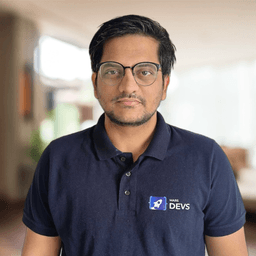
Co-Founder, MarsDevs
Vishvajit started MarsDevs in 2019 to help founders turn ideas into production-grade software. With deep expertise in AI, cloud architecture, and product engineering, he has led the delivery of 80+ software products for clients in 12+ countries.
Get more comparisons like this
Join founders, CTOs, and engineering leaders who receive our engineering insights weekly. No spam, just actionable technical content.
Partner with our team to design, build, and scale your next product.
Let’s Talk