TL;DR
Production RAG architecture for enterprise: hybrid retrieval, re-ranking, agentic orchestration, and security patterns. From teams that have deployed 12+ RAG systems.

You built a RAG proof-of-concept in a weekend. It answered questions from your documents, impressed your investors, and made it into your pitch deck. Then you tried to scale it to 50,000 documents, 200 concurrent users, and queries that span six data sources.
The retrieval got noisy. Answers started contradicting each other. Latency climbed to 15 seconds. Your compliance team asked where each answer came from, and you realized your system couldn't reliably cite its sources.
That's the exact gap between a RAG prototype and a production RAG system. We see this pattern constantly. A founder demos something impressive, raises on the strength of it, then hits a wall when real users show up. If your previous engineering partner shipped you a prototype and called it production-ready, you already know this pain.
Enterprise RAG architecture is the set of design patterns, infrastructure choices, and quality mechanisms that make retrieval-augmented generation reliable at enterprise scale. It covers everything from how you chunk and embed documents to how you route queries, re-rank results, enforce guardrails, and monitor answer quality over time.
MarsDevs builds production RAG systems for enterprise clients. The difference between a prototype and a production deployment isn't more code. It's better architecture.
If you're new to RAG entirely, start with our production guide to RAG for the fundamentals. This guide assumes you understand the basic retrieve-and-generate pipeline and focuses on what enterprises need beyond that baseline.
A basic RAG pipeline (embed documents, retrieve top-K chunks, feed them to an LLM) handles simple Q&A well. It breaks down the moment enterprise requirements show up.
1. Retrieval noise at scale. At 10,000 documents, semantic similarity search returns mostly relevant chunks. At 500,000 documents, the signal-to-noise ratio drops hard. Without re-ranking and filtering, your LLM gets polluted context and generates plausible but wrong answers.
2. Multi-hop queries. Executives don't ask single-fact questions. They ask: "How did our Q3 churn rate in APAC compare to Q2, and what did the retention team change between those quarters?" That query requires retrieval across multiple document sets, date filtering, and synthesis. A single semantic search pass can't handle it.
3. Access control and data governance. Enterprise data has permissions. Not every user should see every document. A production RAG system needs row-level or document-level access control baked into the retrieval layer, not bolted on as an afterthought.
4. Auditability and citation. Regulated industries (finance, healthcare, legal) need every AI-generated answer to cite its sources. If your system can't trace a claim back to a specific paragraph in a specific document version, it's not enterprise-ready.
5. Consistency under load. A RAG system that works for 10 queries per minute might degrade at 1,000 queries per minute. Embedding API rate limits, vector database throughput, and LLM token budgets all become bottlenecks.
The cost of refactoring a production RAG pipeline is 3-5x the cost of building it right the first time. Most teams discover these failure modes after they've committed to a naive architecture. We've watched it happen repeatedly.
Enterprise RAG architecture in 2026 builds on four core patterns that address the failure modes above. Each pattern adds a layer of intelligence to the retrieval pipeline.
Hybrid retrieval combines semantic search (vector similarity) with lexical search (keyword matching like BM25). This is the production default for enterprise RAG in 2026. There's a good reason it became the standard so fast.
Semantic search excels at finding conceptually similar content but misses exact terms. If a user queries "HIPAA Section 164.512(k)(1)," a pure vector search might return general HIPAA content instead of the exact regulation. BM25, a lexical keyword matching algorithm, catches these exact matches.
How hybrid retrieval works in practice:
Production systems using hybrid retrieval report 15-25% higher precision than vector-only approaches, according to benchmarks from Weaviate and Pinecone research.
Not every query needs the same retrieval strategy. A factual lookup ("What is our refund policy?") needs different handling than a comparative analysis ("How do our enterprise plans compare to competitors on security features?").
Query routing uses a lightweight classifier (or an LLM call) to categorize incoming queries and route them to specialized sub-pipelines. Intelligent routing improves precision by 30-40% compared to monolithic approaches that run every query through the same pipeline. It also cuts cost, because simple queries skip expensive multi-step retrieval.
| Query Type | Routing Strategy | Example |
|---|---|---|
| Simple factual | Direct vector search, top-3 | "What is the API rate limit?" |
| Multi-document | Parallel retrieval + merge | "Summarize all Q3 reports" |
| Comparative | Structured retrieval from multiple sources | "Compare Plan A vs Plan B pricing" |
| Temporal | Date-filtered retrieval | "What changed in the March policy update?" |
| Relational | Graph-based retrieval | "Who approved the vendor contract for Project X?" |
Initial retrieval (whether vector, lexical, or hybrid) returns a broad set of candidates. Re-ranking narrows that set to the most relevant chunks using a cross-encoder model that scores each query-document pair individually.
Re-ranking alone can improve RAG answer quality by 15-25%. Cross-encoder models like Cohere Rerank, BGE-Reranker, and ColBERT evaluate the full interaction between query and document, catching relevance signals that bi-encoder similarity search misses.
The tradeoff: Cross-encoders are slower than bi-encoders because they process each pair individually. Re-rank 100 candidates, not 10,000. Use initial retrieval to get a broad candidate set, then re-rank to find the best 3-5 chunks.
Enterprise RAG needs safety mechanisms that a prototype doesn't:
Tools like Guardrails AI, NeMo Guardrails (NVIDIA), and custom rule engines handle this layer. Skipping guardrails in enterprise RAG isn't a shortcut. It's a liability.
Agentic RAG is the biggest shift in enterprise RAG architecture since vector databases went mainstream. Instead of running a fixed retrieval pipeline, an AI agent orchestrates the entire process: deciding what to retrieve, evaluating whether the retrieved context is sufficient, and iterating until it has a confident answer.
Standard RAG is a one-shot pipeline. Query goes in, chunks come back, LLM generates. If the retrieval was bad, the answer is bad. No feedback loop. No self-correction.
Agentic RAG wraps the retrieval pipeline in a decision-making loop:
This self-correcting loop is what makes agentic RAG powerful for enterprise use cases. Agentic systems solve a significant portion of queries that fail completely under single-shot retrieval, particularly multi-hop and comparative questions.
Agentic RAG isn't always the right call. A full agentic RAG query costs roughly 5-8x a naive RAG query due to multiple LLM calls and retrieval passes. You need to justify the compute spend.
Use agentic RAG when:
Stick with standard RAG when:
We built an agentic RAG system for a legal-tech client that needed to cross-reference case law, internal memos, and regulatory filings in a single query. The naive pipeline returned irrelevant context 40% of the time. The agentic system reduced that to under 8% by decomposing queries and verifying retrieval quality before generation. That's a 5x improvement in retrieval relevance from architecture changes alone.
| Framework | Best For | Key Strength |
|---|---|---|
| LangGraph | Stateful, multi-step agent workflows | Graph-based orchestration with cycles |
| LlamaIndex Workflows | Data-heavy RAG with complex indexing | Strong data connectors and indexing |
| CrewAI | Multi-agent collaboration | Role-based agent design |
| Custom (Python + LLM API) | Full control, minimal dependencies | No framework lock-in |
For a detailed comparison of orchestration frameworks, read our LangChain vs LlamaIndex breakdown.
Graph RAG maps entities and relationships in your data into a knowledge graph, then uses that graph structure for retrieval. A knowledge graph is a structured representation of entities (people, companies, products, concepts) and their relationships. Where vector search finds textually similar passages, Graph RAG understands that "Dr. Smith" is connected to "Clinical Trial #447" which is connected to "FDA Approval Process," and retrieves relational context, not just similar text.
Graph RAG doesn't replace vector search. It solves a different class of problems:
Microsoft's GraphRAG project demonstrated that knowledge graph extraction combined with community detection produces better answers for global, thematic questions compared to naive vector search.
Knowledge graph extraction costs 3-5x more than baseline RAG per document. Every document needs LLM processing for entity and relationship extraction. For a 100,000-document corpus, initial graph construction can take days and cost $5,000-$15,000 in LLM API calls alone.
But for the right use cases, Graph RAG delivers search precision approaching 99% by using structured taxonomies and ontologies to interpret relationships between concepts, according to Fluree's research on GraphRAG. The ROI question is straightforward. Is your data relational? Do your queries need that relational understanding? If yes to both, the upfront cost pays for itself.
| Factor | Vector RAG | Graph RAG | Hybrid (Vector + Graph) |
|---|---|---|---|
| Setup cost | $5K-25K | $20K-75K | $30K-100K |
| Best query type | Factual, single-document | Relational, thematic | All types |
| Latency | 1-3 seconds | 3-10 seconds | 2-8 seconds |
| Update cost | Low (re-embed new docs) | High (re-extract entities) | Medium |
| Accuracy (simple queries) | High | Moderate | High |
| Accuracy (relational queries) | Low-Moderate | Very High | Very High |
| Maturity (2026) | Production-standard | Early production | Emerging |
Your tech stack decisions compound. Picking the wrong vector database or embedding model creates technical debt that costs months to unwind. We've made these decisions across dozens of production deployments. Here's what actually works in 2026.
Your embedding model determines how well your system understands semantic meaning. Get this wrong, and every downstream step suffers.
| Model | Dimensions | Strengths | Best For |
|---|---|---|---|
| OpenAI text-embedding-3-large | 3,072 | Highest quality, easy API | Teams prioritizing accuracy over cost |
| Cohere Embed v4 | 1,024 | Strong multilingual support | International deployments |
| BGE-M3 (open source) | 1,024 | Free, good quality, self-hosted | Teams needing data sovereignty |
| Voyage AI voyage-3 | 1,024 | Optimized for code and technical content | Developer-facing products |
Cost note: A 3,072-dimensional embedding takes roughly 2-3x the storage of a 1,536-dimensional one. At 100 million documents, that's the difference between approximately 400 GB and 1.2 TB of vector data. Choose dimensions based on your accuracy requirements and storage budget.
| Database | Type | Best For | Pricing Model |
|---|---|---|---|
| Pinecone | Fully managed | Teams wanting zero-ops; 30ms p99 latency at 1M vectors | Serverless consumption |
| Weaviate | Managed or self-hosted | Hybrid search (vector + BM25 in parallel) | Open source + cloud tiers |
| Qdrant | Managed or self-hosted | Complex metadata filtering; Rust-based performance | Open source + cloud tiers |
| pgvector | PostgreSQL extension | Teams already on Postgres who want to avoid a new database | Free (self-managed) |
| Milvus | Self-hosted (managed via Zilliz) | Very large scale (billions of vectors) | Open source + Zilliz Cloud |
The short answer on vector database selection: Pinecone is the easiest to operate, Weaviate has the best built-in hybrid search, and Qdrant offers the strongest open-source option with advanced filtering. For startups already running PostgreSQL, pgvector is the pragmatic choice.
Self-hosted options are significantly cheaper than managed services at scale. If your team can handle the infrastructure, the cost difference compounds fast, especially above 100 million vectors.
For a direct comparison, see our LangChain vs LlamaIndex guide.
For most enterprise RAG deployments in 2026, this is the starting stack we recommend:
MarsDevs is a product engineering company that builds AI-powered applications, SaaS platforms, and MVPs for startup founders. We've deployed this stack (with variations) across healthcare, fintech, and legal-tech clients through our AI development services. It handles the vast majority of enterprise requirements out of the box. When it doesn't, we know exactly where to customize.
You can't improve what you don't measure. Enterprise RAG systems need continuous evaluation, not a one-time accuracy check at launch.
If you're a non-technical founder evaluating your engineering team's RAG deployment, these are the numbers to ask for. If they can't produce them, that's a red flag.
RAGAS (Retrieval Augmented Generation Assessment) is the standard evaluation framework for RAG systems in 2026. It measures quality across multiple dimensions without requiring human-annotated ground truth.
Core RAGAS metrics:
| Metric | What It Measures | Target Score |
|---|---|---|
| Faithfulness | Are claims in the answer supported by retrieved context? | > 0.85 |
| Context Precision | Is the retrieved context relevant to the question? | > 0.80 |
| Context Recall | Does the retrieved context contain all information needed to answer? | > 0.75 |
| Answer Relevancy | Does the answer actually address the question asked? | > 0.85 |
| Factual Correctness | Does the answer match known ground truth? | > 0.90 |
These scores run on a 0-1 scale. A faithfulness score below 0.85 means your system regularly generates claims not supported by its sources. In regulated industries, that's not just a quality issue. It's a compliance risk.
RAGAS gives you point-in-time evaluation. Production systems need continuous monitoring:
We run evaluation as a CI/CD pipeline on every RAG project we ship. No exceptions. Here's the structure:
RAGAS works well for experimentation and metric exploration. For CI/CD integration and production quality gates, DeepEval is worth evaluating. Some teams use RAGAS to generate golden datasets and then run those through DeepEval for systematic testing.
Data preparation accounts for 30-50% of total project cost. Most teams get the budget wrong by 2-3x because they underestimate this phase. If you've been burned by a vendor who quoted low and then discovered your PDFs have tables, you know exactly what we mean.
| Tier | Architecture | Timeline | Cost Range | Best For |
|---|---|---|---|---|
| Standard | Hybrid retrieval + re-ranking | 4-8 weeks | $25K-75K | Single-domain Q&A, internal search |
| Advanced | Standard + query routing + guardrails | 8-14 weeks | $75K-200K | Multi-domain, regulated industries |
| Agentic | Advanced + self-correcting agents | 12-20 weeks | $150K-400K | Complex multi-hop, research-intensive |
| Graph + Agentic | Full stack with knowledge graph | 16-24 weeks | $250K-600K+ | Entity-rich, highly relational data |
What drives cost up:
What keeps cost down:
The governance overhead for regulated industries adds 20-30% to infrastructure costs. Non-negotiable for finance and healthcare. Factor it into your budget from day one, not as a surprise at month three.
Basic RAG is a single-pass pipeline: embed documents, retrieve similar chunks, generate an answer. Enterprise RAG adds hybrid retrieval, query routing, re-ranking, access control, citation extraction, guardrails, and continuous evaluation. The difference is everything between a prototype that works in a demo and a system that handles 1,000 concurrent users with audit trails in a regulated environment.
Use agentic RAG when your queries regularly require multi-hop reasoning, span multiple data sources, or need self-correction to produce accurate answers. Standard RAG handles simple factual lookups well and costs 5-8x less per query. Start with standard RAG and add agentic capabilities when you identify queries that consistently fail under single-shot retrieval.
There is no single best vector database for enterprise RAG. Pinecone is the easiest to operate with 30ms p99 latency at managed scale. Weaviate offers the strongest built-in hybrid search combining vector and BM25 keyword retrieval. Qdrant delivers excellent open-source performance with advanced metadata filtering. For teams already on PostgreSQL, pgvector avoids adding a new database to your stack. Your choice depends on scale, hybrid search needs, and whether you prefer managed or self-hosted infrastructure.
Use the RAGAS framework to measure faithfulness, context precision, context recall, and answer relevancy. Target faithfulness above 0.85 and context precision above 0.80. Complement automated metrics with weekly human review of 50-100 production responses and continuous monitoring of retrieval hit rate, citation accuracy, and latency distribution. For CI/CD integration, pair RAGAS with DeepEval for systematic regression testing.
Graph RAG maps entities and relationships in your data into a knowledge graph, then uses that structure for retrieval instead of (or alongside) vector similarity search. Use it when your data contains rich entity relationships (healthcare records, financial networks, legal case files) and your queries need relational reasoning ("Which suppliers of Company X also supply Company Y?"). Graph RAG costs 3-5x more to build than vector RAG, so the query complexity needs to justify the investment. For a foundational understanding, see our guide on what RAG is and how it works.
A standard enterprise RAG system (hybrid retrieval, re-ranking, guardrails) costs $25K-75K and takes 4-8 weeks. Advanced systems with query routing and compliance features run $75K-200K over 8-14 weeks. Full agentic + Graph RAG deployments range from $250K-600K+ and take 16-24 weeks. Data preparation accounts for 30-50% of the total budget, and governance requirements add 20-30% for regulated industries.
Yes. A production-capable open-source stack includes BGE-M3 or Nomic embeddings, Qdrant or Milvus for vector storage, LangChain or LlamaIndex for orchestration, and an open-weight LLM like Llama 3 or Mistral for generation. The trade-off is operational complexity: you manage infrastructure, scaling, and updates yourself. For RAG vs fine-tuning decisions, open-source gives you full control but requires a team that can maintain the stack.
Hybrid retrieval combines semantic vector search with lexical keyword search (BM25) to improve retrieval precision. Semantic search finds conceptually similar content but misses exact terms; keyword search catches exact matches but misses semantic meaning. Combined, hybrid retrieval delivers 15-25% higher precision than vector-only approaches, making it the production default for enterprise RAG in 2026.
Enterprise RAG needs three layers of guardrails. Input guardrails block prompt injection attempts, detect off-topic queries, and enforce input length limits. Output guardrails check for hallucinated claims, verify citations exist in source documents, and redact PII based on user permissions. Retrieval guardrails enforce document-level access control, filter by data classification, and apply freshness constraints. Tools like NeMo Guardrails from NVIDIA and Guardrails AI handle this layer.
Query routing uses a lightweight classifier or LLM call to categorize incoming queries and route them to specialized retrieval sub-pipelines. A simple factual lookup uses direct vector search, while a multi-document synthesis query uses parallel retrieval and merge. Intelligent routing improves precision by 30-40% compared to monolithic approaches that run every query through the same pipeline, and reduces cost because simple queries skip expensive multi-step retrieval.
The gap between a RAG prototype and an enterprise-grade production system isn't a weekend of coding. It's architecture decisions that determine whether your system scales, stays accurate, and meets compliance requirements six months from now.
Start with hybrid retrieval and re-ranking. Add query routing when your query patterns diverge. Layer in agentic capabilities when single-shot retrieval fails on complex questions. Bring in Graph RAG only when your data is genuinely relational and your queries demand it.
Founded in 2019, MarsDevs has shipped 80+ products across 12 countries for startups and scale-ups. We build production RAG systems that handle enterprise requirements from day one, not prototypes that need a rebuild when real traffic hits.
Building a RAG system? We've deployed these architectures in production across healthcare, fintech, and legal-tech. Book a free strategy call and we'll scope the right architecture for your use case in 30 minutes.
We take on 4 new projects per month. Claim an engagement slot before your competitor ships first.
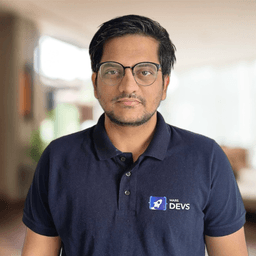
Co-Founder, MarsDevs
Vishvajit started MarsDevs in 2019 to help founders turn ideas into production-grade software. With deep expertise in AI, cloud architecture, and product engineering, he has led the delivery of 80+ software products for clients in 12+ countries.
Get more insights like this
Join founders, CTOs, and engineering leaders who receive our engineering insights weekly. No spam, just actionable technical content.


