TL;DR
A practical GenAI playbook for startup founders. 4 defensible moats, build-vs-API decision framework, cost estimates, and how to ship your first AI feature fast.

You have an AI startup idea. So do about 4,000 other founders who read the same Y Combinator blog post last week. The gap between the startups that ship and the ones that stall comes down to three things: timing, approach, and execution speed.
Generative AI is a category of artificial intelligence that creates new content, including text, images, code, and video, by learning patterns from training data and generating new outputs. In 2026, the generative AI infrastructure layer has matured, costs have collapsed, and investor expectations have sharpened. LLM inference prices dropped roughly 10x per year for the past three years, according to benchmark tracking data from CloudIDR. GPT-4-class performance is now available at prices that were GPT-3.5 territory two years ago. That changes the unit economics of every AI product.
Unit economics refers to the direct revenues and costs associated with a business model on a per-unit basis. For AI startups, this includes inference costs, data preparation expenses, and API fees per user or transaction.
Three market signals matter for founders right now:
MarsDevs is a product engineering company that builds AI-powered applications, SaaS platforms, and MVPs for startup founders. We have shipped GenAI products across fintech compliance, SaaS content automation, and e-commerce personalization for clients in 12 countries. The patterns in this guide come from production deployments, not pitch decks.
The window is open. But "build something with AI" is not a strategy. What you build, how you build it, and where you create defensibility separate funded startups from failed experiments.
Every GenAI startup faces the same foundational decision: how close to the model layer do you need to operate? The three approaches are API-first integration, fine-tuning a pre-trained model, and building a custom model from scratch. Most early-stage startups should start with API-first, add RAG for grounding, and fine-tune only when data volume and domain specificity justify the investment.
If you just raised your seed round and need to show investors a working product in 90 days, this decision is the first one to get right.
API-first means calling a pre-trained large language model (LLM) through a provider's API and building your product logic around the responses. A large language model is a neural network trained on massive text datasets that generates human-like text by predicting the next token in a sequence. This is where 90% of startups should begin.
Best for: MVPs, products where speed-to-market matters more than model control, use cases where general-purpose models perform well enough.
Cost: $0.0005 to $0.03 per 1,000 tokens depending on the model. A chatbot handling 5,000 queries per day at mid-tier pricing runs roughly $1,500/month in inference alone.
Advantages:
But there's a catch. You are building on someone else's foundation. If OpenAI raises prices, changes their terms, or ships a competing product, your margin evaporates overnight. API-first is a starting point, not an endpoint.
Fine-tuning is the process of training a pre-trained AI model further on a smaller, domain-specific dataset so it performs better for your use case. Think of it as teaching a smart generalist to become a specialist.
Best for: Products that need domain-specific accuracy, consistent output formatting, or behavior that prompt engineering alone cannot achieve. Prompt engineering is the practice of designing input prompts to guide a model toward desired outputs without additional training. RAG vs fine-tuning is a critical decision at this stage.
Cost: Small models (2-3B parameters) with LoRA fine-tuning cost $300 to $700. Larger 7B models run $1,000 to $3,000 with LoRA, or up to $12,000 for full fine-tuning. Enterprise-grade fine-tuned models cost $80,000 to $200,000 according to AI Superior's 2026 pricing data.
The economics test: If your current API spend is $200/month and fine-tuning costs $8,000, your break-even is 40 months. That math does not work for most startups. But if you process 10 million tokens monthly, API costs hit $10,000/year, and a $2,000 fine-tuning investment enables a smaller, cheaper model to handle the same workload. Run the numbers before committing budget.
Building a foundation model from scratch requires tens of millions of dollars, massive compute, and a research team. This is what OpenAI, Anthropic, and Google do. It is almost certainly not what your startup should do.
Best for: Companies with $50M+ in funding, unique data at enormous scale, and a thesis that existing models fundamentally cannot serve their market.
The realistic path for most founders: Start API-first, add RAG for grounding in your proprietary data, and fine-tune only when you have enough domain-specific data and token volume to justify the investment. Retrieval-Augmented Generation (RAG) is an AI architecture that retrieves relevant data from external knowledge sources and feeds it to an LLM at generation time, grounding responses in proprietary or verified data without the cost of fine-tuning. That is the exact sequence we use with every GenAI client at MarsDevs. We have seen this path work across 12 countries and every stage from pre-seed to Series B.
| Approach | Time to Ship | Upfront Cost | Defensibility | Best For |
|---|---|---|---|---|
| API-first | 2-6 weeks | $5K-$25K | Low | MVP validation |
| API + RAG | 4-10 weeks | $15K-$60K | Medium | Data-grounded products |
| Fine-tuning | 8-16 weeks | $10K-$200K | Medium-High | Domain specialists |
| Custom model | 6-18 months | $5M-$50M+ | High | Frontier labs only |
Here is the hard truth every GenAI founder needs to hear: if your product is a UI on top of an API call, you do not have a startup. You have a feature that OpenAI will ship next quarter.
An AI wrapper is a software product that provides a user interface on top of a third-party AI model API without adding substantial proprietary value, workflow integration, or data differentiation. Approximately 80% of AI wrapper startups are expected to fail by the end of 2026. The ones that survive share specific characteristics.
1. Proprietary data moat. A proprietary data moat is a competitive advantage created when a startup accumulates unique, high-value data that improves AI model performance in ways competitors cannot replicate using publicly available data. Not publicly scraped data. Actual, regulated, high-value datasets that improve model performance. A legal AI startup trained on 500,000 anonymized case outcomes has something OpenAI will never build from the public internet.
2. Workflow ownership. Your AI does not just generate output. It plugs into the user's existing workflow so deeply that ripping it out would cost more than keeping it. Billing integrations, compliance audit trails, team collaboration layers: these create switching costs that keep customers locked in.
3. Distribution advantage. You own the customer relationship in a specific vertical. Picture a GenAI tool for HVAC contractors built by someone who spent ten years in commercial HVAC. That specificity is what Y Combinator explicitly asks for in their 2026 Request for Startups.
4. Compound data effects. Every user interaction makes your product smarter in a way that benefits all users. This is the strongest moat because it accelerates over time. Recommendation engines, adaptive learning systems, and collaborative filtering all create this flywheel.
If you cannot point to at least one of these four moats, pause before writing code. Your GenAI product strategy needs a defensibility thesis before it needs a tech stack.
Investors have moved past "we use AI" as a differentiator. Here is what Series A benchmarks look like for GenAI startups, based on Crunchbase and VC survey data:
That last point matters more than most founders realize. VCs do not fund "AI for everything." They fund AI for a specific, painful, expensive problem in a domain where the founders have credibility. If you are a non-technical founder, you do not need to become an ML engineer. You need a technical partner who has actually shipped AI to production.
Choosing your generative AI tech stack is one of the first decisions you will make. It is also one of the easiest to overthink. Here is what works in production right now.
| Provider | Best For | Price Range (per 1M tokens) |
|---|---|---|
| OpenAI (GPT-4o, GPT-4o mini) | General-purpose, multimodal | $0.15 - $5.00 |
| Anthropic (Claude 3.5 Sonnet) | Complex reasoning, longer context | $0.80 - $15.00 |
| Google (Gemini 2.0) | Multimodal, large context windows | $0.10 - $3.50 |
| Open-source (Llama 3, Mistral) | Cost control, self-hosting, privacy | Compute cost only |
Our recommendation: Start with OpenAI or Anthropic APIs. Both have battle-tested SDKs, strong documentation, and predictable pricing. Switch to open-source models only when you need data sovereignty, cost reduction at scale, or fine-tuning flexibility. We have built with all four providers in production and the managed APIs save you weeks of DevOps headaches early on.
For most GenAI startups, RAG is the fastest path to differentiation. It grounds your model's responses in your proprietary data without the cost of fine-tuning.
If you are building a knowledge-heavy product (legal research, medical analysis, financial compliance), RAG is not optional. It is your core architecture. Read our RAG vs fine-tuning comparison to understand the trade-offs.
A Minimum Viable Product (MVP) is the simplest version of a product that delivers core value to early users, used to validate demand before investing in full development. Founders consistently over-engineer their first GenAI product. You have limited runway and need to prove demand, not build perfect infrastructure. Skip these until you have paying users:
Ship the simplest thing that proves your AI creates real value for users. Then iterate. We have shipped 80+ products and the pattern holds every time: founders who scope aggressively and ship fast learn more in 6 weeks than teams that spend 6 months perfecting infrastructure.
At least 50% of generative AI projects get abandoned after proof of concept, according to Gartner research. The reasons are consistent. Here are the six mistakes we see founders make repeatedly, based on the GenAI products we have built and the failed projects we have been called in to rescue.
You spent three months fine-tuning a model. Your accuracy is 94%. Nobody cares because the problem you solved was not painful enough to pay for. This happens more often than founders admit. Validate that someone will pay for the outcome before you optimize the model.
AI is the engine, not the car. Your users do not buy "generative AI." They buy faster contract review, automated compliance reports, or personalized onboarding sequences. Frame your product around the outcome, not the technology. The best GenAI product strategy centers on user pain, not model capability.
That negligible per-token cost becomes a nightmare at scale. A startup processing 10,000 documents per day at $0.01 per call spends $36,500 per year on inference alone. Model your unit economics at 10x and 100x your current usage before you raise money. Read our full AI development cost breakdown for production-grade budgeting.
If you cannot measure whether your AI is getting better or worse, you are flying blind. Set up automated evaluation from day one: accuracy benchmarks, hallucination detection, user satisfaction scores, latency tracking. Organizations that ship successful GenAI products redo their evaluation approach 1.4x more often than those that fail. Build the measurement system before you build the feature.
Safety and bias are not v2 features. GenAI systems produce hallucinations, can perpetuate biases, and create novel risks like deepfakes. Build guardrails into v1. The EU AI Act and similar regulations make this a legal requirement, not just a best practice. Getting this wrong does not just hurt users. It can shut your startup down.
Early-stage AI startups spend $220,000+ per year on entry-level AI engineers, according to 2026 compensation data. That burns 12 to 18 months of runway for a single hire. If you have been burned by slow hiring timelines before, you know how painful this is.
A smarter path: partner with an experienced engineering team, ship your MVP in 6 to 8 weeks, validate demand, then build your internal team with revenue to support it.
MarsDevs provides senior engineering teams for founders who need to ship fast without compromising quality. We take on 4 new projects per month and start building within 48 hours. For AI-first startups, that speed difference can mean the gap between first-mover advantage and showing up late to a crowded market.
No. Most successful GenAI startups are built by founders with deep domain expertise who partner with engineers who know the AI layer. The strongest Y Combinator applications in 2026 come from founders who understand their target industry, not founders with the most ML papers.
What you need: domain knowledge, customer access, and an engineering partner who has shipped AI products in production. If you are a non-technical founder evaluating technical quality, focus on whether your engineering team can show you working demos every two weeks, not whether they can explain transformer architectures.
A GenAI MVP costs $5,000 to $80,000, depending on complexity. API-first products sit on the lower end ($5,000 to $25,000). Products requiring RAG pipelines, custom integrations, or fine-tuning land on the higher end ($25,000 to $80,000). Ongoing inference costs add $500 to $10,000+ per month depending on usage volume.
The biggest hidden cost is data preparation, which typically consumes 30 to 50% of your total budget. See our AI development cost guide for detailed breakdowns by project type.
The highest-traction GenAI use cases in 2026 are: sales automation and outreach (personalized messaging at scale), document processing and extraction (contracts, invoices, compliance documents), workflow orchestration (multi-step task automation), and vertical-specific tools (legal research, medical coding, financial analysis).
Products that automate an expensive human workflow in a regulated industry have the strongest product-market fit. The ROI is immediately measurable, which makes both sales and fundraising easier.
Build one of four moats: proprietary data that improves your model in ways competitors cannot replicate, deep workflow integration that creates high switching costs, distribution advantage in a specific vertical, or compound data effects where every user makes the product smarter.
If your differentiation is "we use AI," you have no differentiation. Focus on the problem you solve and the data you accumulate, not the model you call.
For most early-stage startups, not yet. Start with API calls plus RAG to ground responses in your proprietary data.
Fine-tuning makes sense when two conditions are true: you have enough domain-specific data to measurably improve performance, and your token volume is high enough that a smaller fine-tuned model saves money over API calls. The break-even math: if fine-tuning costs $8,000 and saves $200/month on API costs, you need 40 months to recoup. At $2,000/month in savings, you recoup in 4 months. Run the numbers for your specific case. Our RAG vs fine-tuning guide breaks down the full decision framework.
VCs look for four things: defensibility (what stops someone from copying you in a weekend), unit economics (can you maintain 60%+ gross margins with inference costs baked in), team composition (domain expert plus production AI engineer), and growth metrics (ARR of $1M to $3M with 20%+ month-over-month growth for Series A).
The biggest red flag is a product that is mostly an interface layer without deep integration, proprietary data, or embedded process knowledge. If a strong AI-native team can rebuild your product in a weekend, investors will pass.
The generative AI market is not waiting. Investors deployed $242 billion into AI startups in a single quarter. The founders capturing that capital are not the ones with the best models. They are the ones who shipped a product, proved demand, and built a moat around proprietary data or workflow ownership.
If you have the domain expertise but not the engineering team, that gap should not cost you 6 to 12 months of hiring and onboarding. We have been in that exact situation with founders dozens of times. Founded in 2019, MarsDevs has shipped 80+ products across 12 countries for startups and scale-ups, including AI-powered MVPs for fintech, SaaS, and e-commerce.
Want to ship your GenAI product before your runway runs out? Book a free strategy call and start building in 48 hours. We take on 4 new projects per month. Claim a slot.
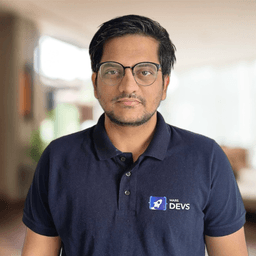
Co-Founder, MarsDevs
Vishvajit started MarsDevs in 2019 to help founders turn ideas into production-grade software. With deep expertise in AI, cloud architecture, and product engineering, he has led the delivery of 80+ software products for clients in 12+ countries.
Get more insights like this
Join founders, CTOs, and engineering leaders who receive our engineering insights weekly. No spam, just actionable technical content.


