TL;DR
Custom software development for startups costs $25,000 to $150,000 in 2026 depending on scope, complexity, and team location. Startups that build custom software own their IP, scale without platform limits, and differentiate from competitors using the same off-the-shelf tools. The smartest approach is MVP-first: ship a focused product in 6 to 10 weeks, validate with real users, then iterate. MarsDevs ships custom startup software starting at $25,000 with senior engineers, full code ownership, and a 48-hour project kickoff.

You closed your seed round three months ago. You patched together a product with Bubble, Zapier, and a Notion database. It worked for your first 50 users. Now you have 500, your automation breaks twice a week, and your biggest customer just asked for a feature your no-code stack simply cannot support.
This is the crossover point. Every startup hits it. The moment off-the-shelf tools stop helping and start limiting growth. Custom software development for startups is not about building everything from scratch on day one. It is about building the right thing, at the right time, with the right team.
MarsDevs is a product engineering company that builds custom software, MVPs, and AI-powered applications for startup founders. Founded in 2019, we have shipped 80+ products across 12 countries. This guide draws from real projects, not theory.
Here is what you will learn: why startups need custom software, the build vs. buy decision framework, how to choose the right tech stack, a full cost breakdown ($5K to $200K ranges), realistic timelines, how to pick a development partner, and the MVP-first approach that saves founders from burning through runway on the wrong features.
The startup landscape in 2026 looks different from even two years ago. AI coding assistants have boosted developer throughput by 20 to 40% on standard tasks. GenAI features (RAG, chatbots, copilots) are becoming table stakes for many product categories. And user expectations for software quality have never been higher.
Most startups begin with off-the-shelf tools. That is fine for validation. But off-the-shelf software is built for the average use case, not yours. The moment you need custom workflows, unique data models, or integrations that do not exist as pre-built connectors, you hit a wall.
Here is what we see repeatedly across our 80+ shipped products:
Custom software development for startups provides three advantages off-the-shelf cannot match:
Here is a real example. A fintech startup came to us after trying to build on a no-code platform. At 2,000 users, their transaction processing hit platform rate limits. We rebuilt their core as custom software in 8 weeks. They scaled to 50,000 users in the next quarter without a single infrastructure bottleneck.
Not every startup needs custom software immediately. The real question is when to make the switch. Here is the framework we use with founders who come to us at this crossroads.
| Factor | Choose Off-the-Shelf | Choose Custom |
|---|---|---|
| Stage | Pre-revenue, testing idea | Post-revenue, scaling |
| User count | Under 500 | 500+ and growing fast |
| Core feature | Exists as a SaaS product | Unique to your business |
| Budget | Under $5,000 | $5,000+ available |
| Timeline | Need something in days | Can invest 6 to 12 weeks |
| Data sensitivity | Low | High (fintech, healthtech) |
| Integration needs | Standard APIs | Custom workflows |
| Competitive moat | Brand/marketing-driven | Product/technology-driven |
The smartest startups do not go all-custom or all-off-the-shelf. They mix both.
This hybrid approach typically saves 30 to 50% compared to building everything custom while preserving the ability to differentiate where it matters. We have used this exact playbook with dozens of startups. It works.
Your tech stack affects development speed, hiring, maintenance costs, and scalability for years. Choose wrong, and you pay for it in slower feature velocity, higher hosting costs, or a painful rewrite 12 months down the road.

| Use Case | Frontend | Backend | Database | Hosting |
|---|---|---|---|---|
| SaaS MVP | React/Next.js | Node.js or Python (FastAPI) | PostgreSQL | Vercel + AWS |
| Marketplace | Next.js | Node.js | PostgreSQL + Redis | AWS |
| AI-first product | React/Next.js | Python (FastAPI) | PostgreSQL + Pinecone | AWS + GPU instances |
| Mobile-first | React Native or Flutter | Node.js or Python | PostgreSQL | AWS/GCP |
| E-commerce | Next.js | Node.js | PostgreSQL + Redis | Vercel + AWS |
React and Next.js dominate the frontend for one reason: the hiring pool is massive. You will never struggle to find React developers when you need to grow your team.
PostgreSQL is the default database for startups in 2026. It handles relational data, JSON documents, full-text search, and vector embeddings (for AI features) in a single database. Fewer moving parts. Lower operational complexity.
Python (FastAPI) is the go-to for AI-first startups. If your product touches LLMs, computer vision, or data processing, Python gives you access to the entire AI/ML ecosystem. Node.js remains the better choice for real-time features, chat applications, or when your team already has strong JavaScript expertise.
The biggest mistake we see? Choosing bleeding-edge tools because they are trendy. One startup we worked with chose a niche serverless framework with 200 GitHub stars. Six months later, the maintainer abandoned it. They spent $40,000 on a migration to a supported stack. Boring technology that works beats exciting technology that disappears. Every time.
Every founder asks the same question first. How much? Here is the honest answer based on real project data from 2026.

| Project Tier | Cost Range | Timeline | What You Get |
|---|---|---|---|
| Lean MVP | $5,000 to $25,000 | 6 to 8 weeks | Core feature, auth, basic dashboard, deployment |
| Standard MVP | $8,000 to $30,000 | 8 to 14 weeks | Multiple features, admin panel, integrations, mobile-responsive |
| Growth-Stage Product | $30,000 to $200,000 | 3 to 5 months | Full platform, analytics, API layer, third-party integrations |
| Enterprise/Complex | $150,000+ | 5 to 12 months | Compliance, multi-tenant, AI features, custom infrastructure |
Cost multipliers:
Cost reducers:
| Team Location | Hourly Rate | MVP Cost ($50K scope) | Quality Notes |
|---|---|---|---|
| US/Canada | $100 to $200/hr | $80,000 to $150,000 | Highest rates, same timezone |
| Western Europe | $80 to $150/hr | $65,000 to $120,000 | Strong engineering culture |
| Eastern Europe | $40 to $80/hr | $35,000 to $70,000 | Excellent quality-to-cost ratio |
| India (top-tier) | $15 to $25/hr | $15,000 to $30,000 | Best value with structured teams |
| Latin America | $35 to $70/hr | $30,000 to $60,000 | Close timezone to US |
The gap between top-tier Indian engineering teams and US teams has shrunk significantly. The key qualifier is "top-tier" and "structured." A senior team inside an agency with delivery processes delivers fundamentally different results than random freelancers on a job board.
MarsDevs provides senior engineering teams for founders who need to ship fast without compromising quality. Our rates reflect the India-based talent advantage while maintaining the delivery standards of a US-based team.
Founders consistently underestimate timelines. Here is what custom software development for startups actually takes when done right.
| Phase | Duration | Activities |
|---|---|---|
| Discovery and scoping | 1 to 2 weeks | Requirements, user stories, architecture decisions, tech stack selection |
| Design | 1 to 3 weeks | Wireframes, UI/UX design, design system setup |
| Core development | 4 to 10 weeks | Backend, frontend, database, API development |
| Integration and testing | 1 to 3 weeks | Third-party integrations, QA, performance testing |
| Deployment and launch | 1 week | CI/CD setup, staging and production environments, monitoring |
Total: 8 to 19 weeks for a typical startup MVP.
Three things kill timelines more than anything else:
We have shipped MVPs in as little as 4 weeks when scope is tight and the founder is deeply engaged. The projects that drag to 6+ months almost always suffer from scope expansion, not technical complexity.
Picking the wrong development partner is the most expensive mistake a startup founder can make. A bad agency wastes 3 to 6 months of runway, delivers code you cannot maintain, and leaves you starting over. We have rebuilt projects from failed agencies more times than we would like.
MarsDevs starts building in 48 hours after kickoff. We assign senior engineers who stay with your project from start to finish. You own 100% of the code from day one. And we take on only 4 new projects per month to ensure quality never drops. Talk to our engineering team to see if we are a fit.
The most expensive mistake in startup software development is building too much before validating anything with real users. The MVP-first approach flips this: build the smallest thing that tests your core hypothesis, get it in front of users, and iterate based on data. Not opinions. Data.
Include:
Do not include:
Week 1: Discovery, scoping, and architecture decisions. Week 2: Design system setup, wireframes, database schema. Weeks 3 to 4: Core backend and frontend development. Week 5: Integrations, testing, and bug fixes. Week 6: Deployment, monitoring setup, and launch.
This playbook works when scope is ruthlessly controlled. Every feature request gets one question: "Does this help us validate the core hypothesis?" If the answer is no, it goes on the v2 list.
We have shipped 80+ MVPs using this approach. Most take 6 to 8 weeks when scope is tight. The products that succeed are rarely the most feature-rich. They are the ones that solve one problem exceptionally well.
AI has changed startup software in two ways. First, AI coding tools (GitHub Copilot, Cursor) have boosted developer productivity by 20 to 40%, making custom development faster and more affordable. Second, AI features (chatbots, semantic search, document processing) are becoming expected functionality in many product categories.
If your product involves AI, budget accordingly:
| AI Feature | Additional Cost | Monthly API Costs | Timeline Impact |
|---|---|---|---|
| Chatbot/assistant | $5,000 to $40,000 | $100 to $1,000 | +2 to 3 weeks |
| Semantic search (RAG) | $8,000 to $50,000 | $50 to $300 | +2 to 4 weeks |
| Document processing | $10,000 to $25,000 | $200 to $1,000 | +3 to 4 weeks |
| Custom AI agents | $3,000 to $15,000 | $300 to $2,000 | +4 to 6 weeks |
Here is the thing about AI-first MVPs: the demo is not the product. A ChatGPT wrapper that works in a demo fails in production when you need to handle edge cases, hallucination prevention, latency requirements, and cost control at scale. Budget 30 to 40% of your AI development time for production hardening.
MarsDevs provides AI and multi-modal solutions for startups building AI-first products. We have deployed RAG systems, AI agents, and LLM integrations in production environments across fintech, healthtech, and e-commerce.
Custom software development for startups costs $5,000 to $200,000 in 2026, depending on complexity, features, and team location. A lean MVP starts at $5,000 and takes 6 to 8 weeks. Standard products with multiple features and integrations run $8,000 to $30,000. Growth-stage and enterprise-grade platforms with compliance and AI features can reach $200,000+. The biggest cost variable is where your engineering team is located, with a 2x to 3x difference between US and India-based teams.
Start with off-the-shelf tools for validation, then switch to custom software when you hit platform limits. Most startups reach this crossover point between 500 and 2,000 users, when no-code tools break, per-seat SaaS costs become unsustainable, or your core feature requires functionality that no existing product provides. The hybrid approach works best: custom-build your core product and use off-the-shelf for supporting functions like billing and authentication.
The best startup tech stack in 2026 is React or Next.js for the frontend, Node.js or Python (FastAPI) for the backend, and PostgreSQL for the database. This combination offers the largest hiring pool, strong community support, and handles everything from simple CRUD apps to AI-powered platforms. Choose Python if AI/ML is core to your product. Choose Node.js for real-time features or if your team prefers JavaScript across the stack.
A lean MVP takes 6 to 8 weeks. A standard product with multiple features takes 8 to 14 weeks. Complex platforms with compliance, AI features, or enterprise architecture take 3 to 12 months. The biggest timeline risk is scope creep, not technical complexity. Projects with tight scope and engaged founders ship 40 to 60% faster than those with loose requirements.
The MVP-first approach builds the smallest version of your product that tests your core hypothesis with real users. Instead of spending 6 to 12 months building a full platform, you ship a focused product in 6 to 8 weeks with one core feature, authentication, and basic analytics. You then iterate based on real user data. This approach reduces risk, preserves runway, and gets you to product-market fit faster.
Look for a development partner with a portfolio of shipped products (not just designs), senior engineers who will actually work on your project, full code ownership from day one, and transparent pricing with clear scoping. Red flags include fixed-price quotes without product understanding, no technical person in sales meetings, and promises of 50+ features in unrealistic timelines. Ask to interview the engineers and see code samples from similar projects.
Agencies are typically 30 to 50% cheaper than building an in-house team for early-stage startups. A single senior US developer costs $150,000 to $200,000+ in total compensation. An agency provides a full team (2 to 3 engineers, QA, project management) for less than the cost of one in-house hire. Agencies also start immediately, while hiring takes 3 to 6 months. Consider your options for remote engineering teams as a middle ground.
A startup MVP should include one core feature that delivers your unique value, user authentication, a basic onboarding flow, payment integration (if revenue-dependent), and analytics tracking. Everything else goes on the v2 list. Admin dashboards, multi-language support, advanced permissions, and non-core AI features can wait until you have validated demand with real paying users.
AI features add 15 to 30% to development budgets in 2026, plus ongoing API costs of $100 to $2,000 per month depending on usage. A basic chatbot integration costs $5,000 to $40,000 to develop. RAG-based semantic search costs $8,000 to $50,000. Custom AI agents cost $3,000 to $15,000. The hidden cost is production hardening: making AI reliable, handling edge cases, and preventing hallucinations accounts for 30 to 40% of AI development effort.
Yes, and this is often the smartest path. No-code platforms (Bubble, Webflow, Retool) let you validate your concept for $5,000 to $15,000 in 2 to 4 weeks. When you outgrow the platform (typically at 500 to 2,000 users), you transition to custom web application development. Plan your no-code build with eventual migration in mind: keep your data structured, document your business logic, and avoid platform-specific workarounds.
Custom software development for startups is not about having the biggest budget or the most features. It is about building the right thing, at the right time, with the right team.
If you are past the validation stage and your off-the-shelf stack is holding you back, it is time to go custom. Start with an MVP. Ship in 6 to 8 weeks. Let real users tell you what to build next.
MarsDevs ships custom startup software with senior engineers, full code ownership, and a 48-hour kickoff. We take on 4 new projects per month. Book a free strategy call to scope your project, or see how our startup consulting works.
Your runway is burning. Your competitors are building. The best time to start was yesterday. The second-best time is now.
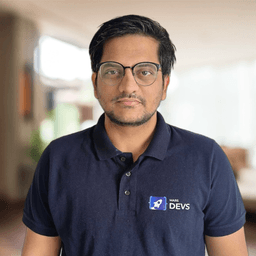
Co-Founder, MarsDevs
Vishvajit started MarsDevs in 2019 to help founders turn ideas into production-grade software. With deep expertise in AI, cloud architecture, and product engineering, he has led the delivery of 80+ software products for clients in 12+ countries.
Get more guides like this
Join founders, CTOs, and engineering leaders who receive our engineering insights weekly. No spam, just actionable technical content.
Partner with our team to design, build, and scale your next product.
Let’s Talk