In the constantly changing world of software development where productivity, collaboration, and quick delivery have become the most important part of development. Imagine a perfect environment, where development and operations teams work together to offer high-quality software with minimal friction.
DevOps, which stands for development and operations, is an innovative methodology changing the way of development, testing, and implementation. This MarsDevs blog explores the fundamentals of DevOps, its core principles, and its significant role in managing your Software Development Life Cycle (SDLC). So, let’s get started!
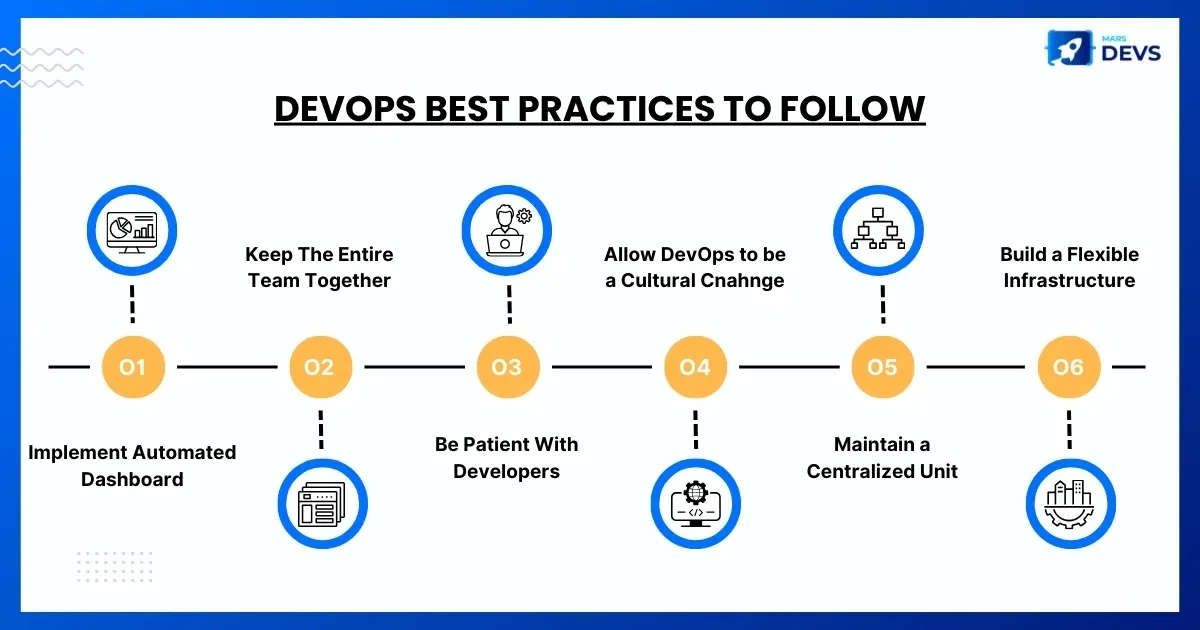
The combination of cultural concepts, practices, and tools is known as DevOps which improves the organization's capabilities to offer services and applications quickly. It focuses on integration and automation to reduce the gap between IT operations (Ops) and software development (Dev).
The goal is to minimize the time of the SDLC while often releasing updates, fixes, and features that closely align with the business objectives. DevOps integrates techniques like automated testing, continuous deployment, continuous integration, and real-time monitoring to ensure software's scalability and reliability.
Feedback loops are the key component of DevOps accelerating delivery and improving overall quality. Developing a culture of shared responsibility, transparency, and continuous improvement is as important as having the right tools.
It assists the teams to innovate continuously and react quickly to changing situations. This method ensures better user experiences and faster time to market.
Development and operations teams used to work in separate groups, but DevOps encourages collaboration. It promotes conversation, teamwork, and shared responsibility.
Automation is important for DevOps because it reduces the possibility of human error and streamlines repetitive processes. Infrastructure management, deployment, and automated testing are included in this.
Software release is done more quickly and reliably by implementing CI/CD techniques to guarantee that code changes are automatically tested and distributed.
Monitoring and Logging: DevOps emphasizes the ongoing functions and recording of the infrastructure and applications, which enables quick detection and fix problems.
Infrastructure as Code (IaC): IaC enables code usage to manage the infrastructure by making the environment regenerate and configuration maintenance simple.
The software development team uses the Software Development Life Cycle (SDLC) as a systematic method to design, build, test, and release high-quality software. Planning, analysis, design, implementation, testing, deployment, and maintenance are some parts of its distinct phases.
Specific deliveries and activities are included in each phase to support the software project's success. The software development life cycle (SDLC) offers an organized method for building dependable, affordable & satisfied software per the client's needs.
Teams may effectively manage the software development process, reduce risks, and guarantee on-time software product delivery using the SDLC.
A set of stages known as the Software Development Life Cycle (SDLC) controls the development and maintenance of software systems. Every phase contains distinct objectives, outputs, and tasks that add to the project's ultimate success.
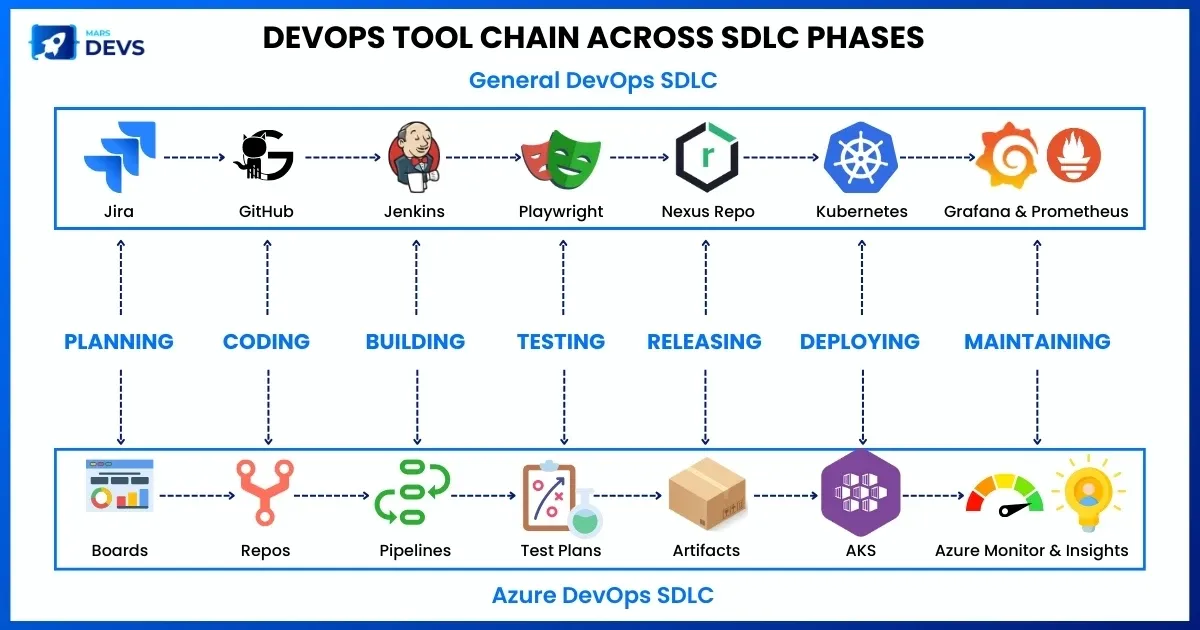
The following are the main elements of the SDLC:
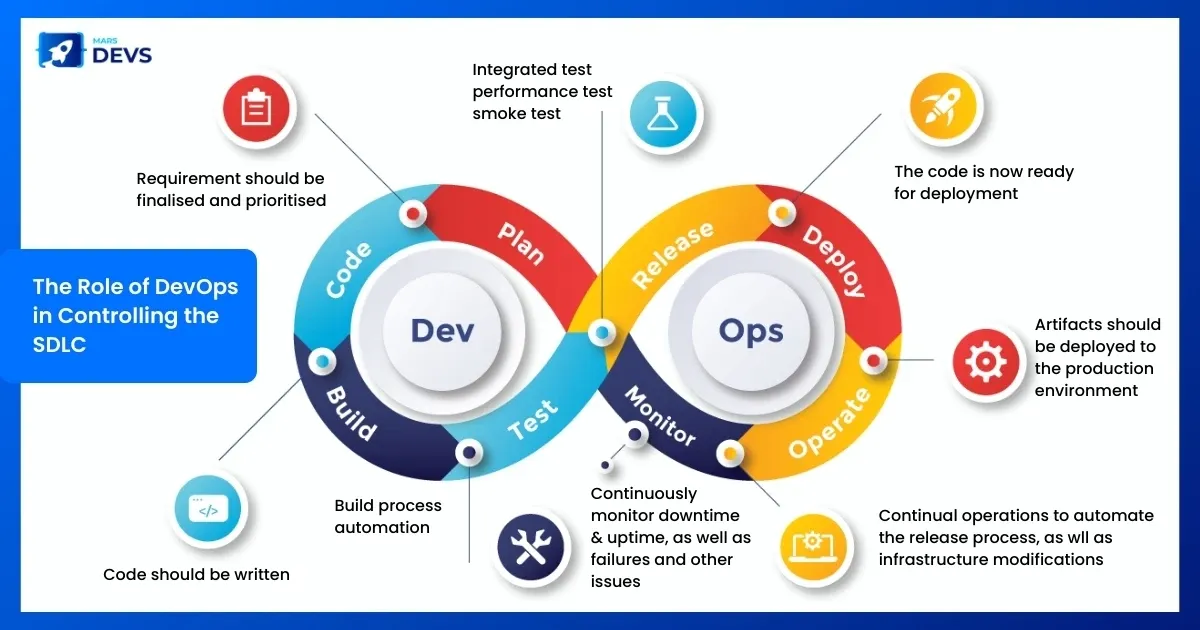
The development cycle is greatly accelerated with DevOps. Code changes are continually integrated, tested, and deployed through the implementation of CI/CD pipelines. The time between development and production is reduced by developers using this continuous feedback loop to find and address problems immediately.
Teams working on development and operations can collaborate more easily with the help of DevOps. This cooperative setting ensures that the two teams are working toward the same objectives, which promotes more effective workflows and more rapid resolution of issues.
Two essential components of DevOps are continuous monitoring and automated testing. They guarantee that all code changes are extensively tested before being deployed and that the reliability and performance of applications are regularly monitored. This proactive strategy reduces the possibility of defects in production.
DevOps teams can easily manage and grow infrastructure with the help of Infrastructure as Code (IaC). IaC makes it possible to supply infrastructure consistently and multiple times, guaranteeing that the environments used for development, testing, and production are identical.
Commonly called DevSecOps, DevOps integrates security procedures into the development process. This method guarantees security across the whole SDLC - from deployment to code development. Early vulnerability identification and mitigation are made possible by automated security testing and compliance checks.
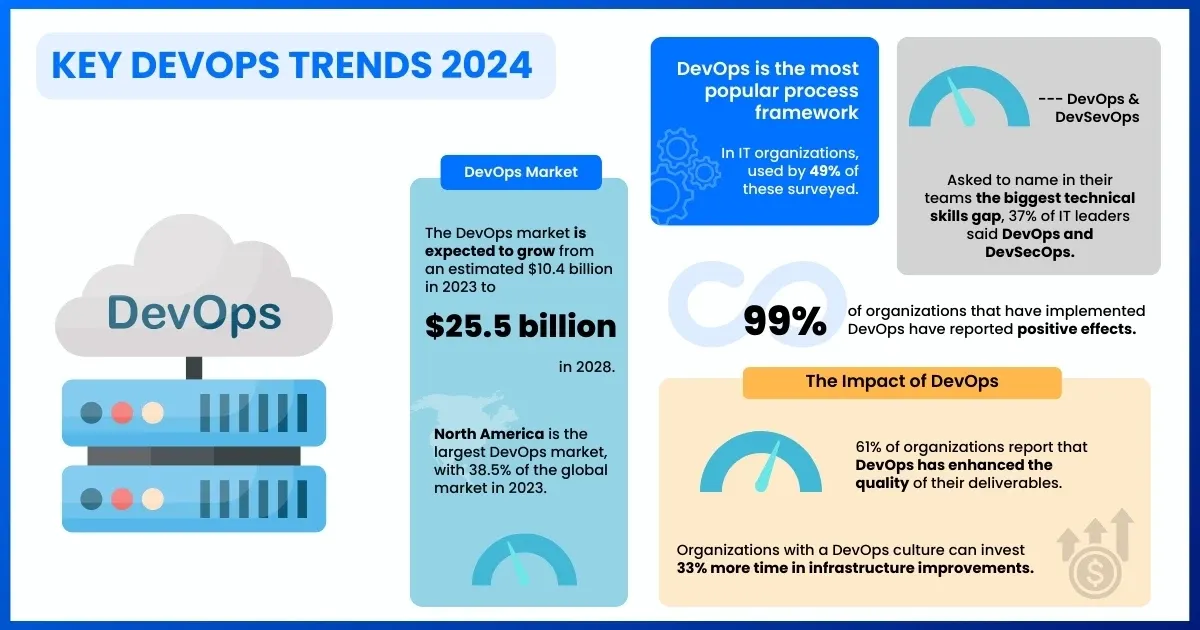
DevOps is a revolution in how we think and work about software development, not just a technique. DevOps offers a thorough framework for managing and improving the Software Development Life Cycle by fostering a culture of collaboration, automating crucial tasks, and integrating security.
Organizations are experiencing more and more benefits, regarding speed, quality, and efficiency as they continue to use DevOps methods. Implementing DevOps involves staying ahead of the trend for developing innovative, reliable software solutions & keeping up with company demands.
You may revolutionize your development processes by implementing DevOps into practice to ensure faster delivery times, better quality, and enhanced teamwork. As a developer, operations specialist, or business executive, you may greatly improve your software development process by adopting DevOps.
Need to tap into the realm of tech development? Reach out to MarsDevs.
Q1: What is the main goal of DevOps?
DevOps promises to improve the efficacy of software development and delivery by increasing collaboration between development teams and automation procedures.
Q2: How does DevOps improve collaboration between teams?
DevOps encourages a culture of shared responsibility, reduces communication barriers between development and operations teams, and improves communication through integrated processes and technologies.
Q3: What is Continuous Integration and Continuous Deployment (CI/CD)?
Continuous Integration and Continuous Deployment (CI/CD) is a DevOps method where code changes are automatically tested and pushed to production environments. As a result, Software release will be easier and more reliable.

Co-Founder, MarsDevs
Vishvajit started MarsDevs in 2019 to help founders turn ideas into production-grade software. With deep expertise in AI, cloud architecture, and product engineering, he has led the delivery of 80+ software products for clients in 12+ countries.
Get more insights like this
Join founders, CTOs, and engineering leaders who receive our engineering insights weekly. No spam, just actionable technical content.


